
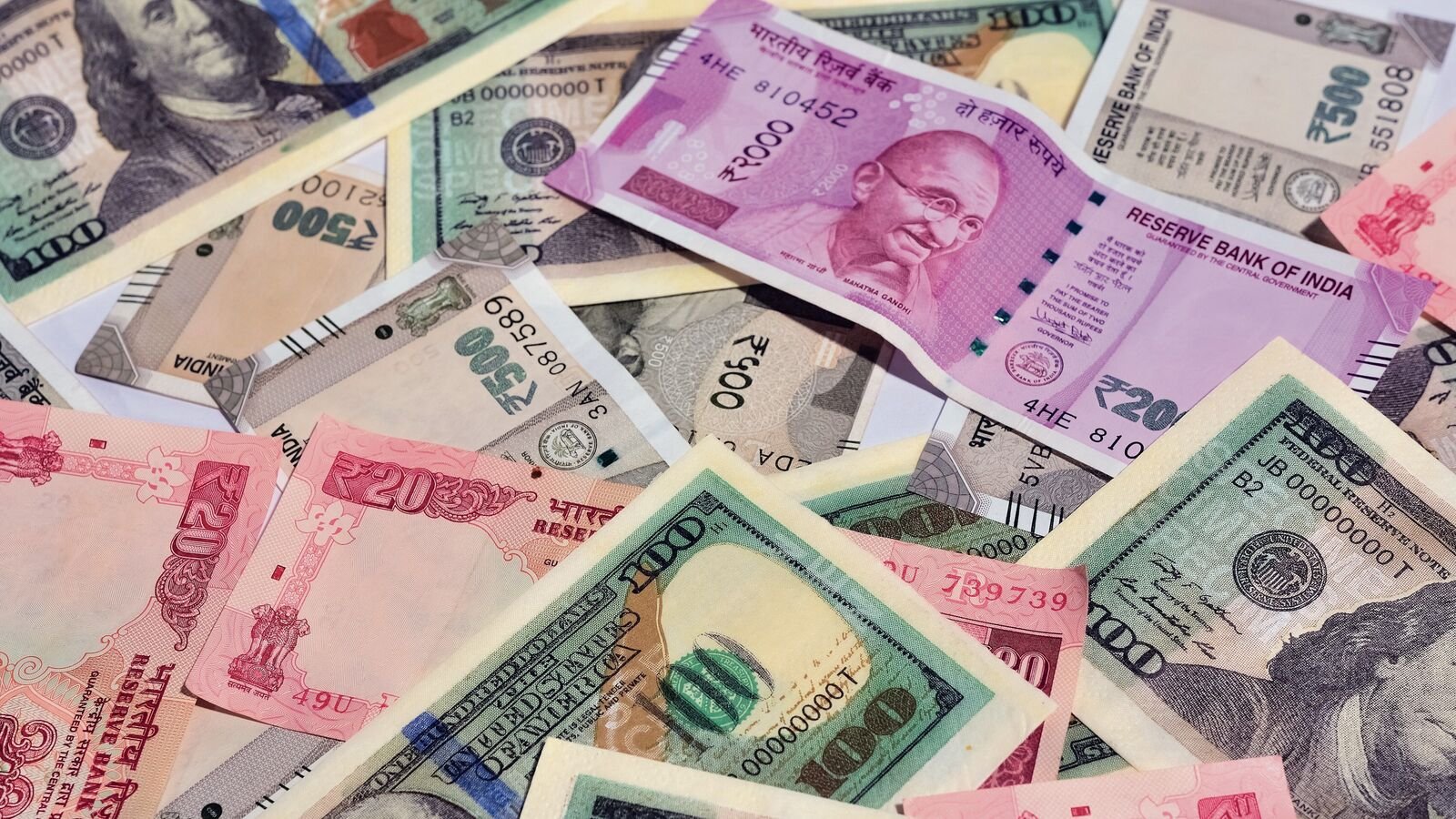
USD vs INR: Indian Rupee marginally gained on Monday after witnessing a sharp drop on Friday. The Indian currency bounced back the Reserve Bank of India intervened strongly to ease the downward pressure.
The rupee was trading at 89.16 against the U.S. dollar on Monday, November 24, appreciating 0.35% for the day. The currency touched an all-time low of 89.48, nearing the psychological mark of 90 per dollar on Friday.
According to reports, the central bank sold dollars both on the order-matching platform and in the non-deliverable forward market, which helped improve sentiment.
On Friday, the currency had slipped beyond 88.80—a level bankers say the RBI had been defending for weeks—triggering renewed pressure that is expected to persist into this week.
Why Rupee is falling?
India-US trade deal
RBI Governor Sanjay Malhotra on Thursday said the recent decline in the rupee is largely due to increased demand for the U.S. dollar.
He noted that this pressure may ease if India and the U.S. finalise a trade agreement. Malhotra also emphasized that India’s foreign exchange reserves provide “strong support” for the currency.
“Expectations for clarity on the India–U.S. trade deal remain unmet, and with timelines still unclear, investor sentiment stays fragile,” said Kunal Sodhani, Head of Treasury at Shinhan Bank in Mumbai.
Strong US Dollar
The dollar index hovered close to the six-month peak on Friday. “Rupee traded weak, pressured primarily by dollar strength as the dollar index moved above 100$, overshadowing the minor positive FII inflows. While domestic flows offered some support, the broader momentum remains tilted toward weakness given the firm USD and ongoing global uncertainty. Rupee is expected to move within a range of 88.40–89.00,” said Jateen Trivedi, VP Research Analyst – Commodity and Currency, LKP Securities.
US Fed rate cut
According to Anuj Gupta, Director, Ya Wealth Research & Advisory, this year rupee depreciated by 4.59%, after lower expectation of cut in interest rates by fed reserve , dollar and bond yield increased sharply and other currency depreciated.
Markets now anticipate a higher chance that the Federal Reserve will deliver a third and final rate cut this year, according to analysts.
Trade deficit
The rupee has been the weakest currency in Asia this year, and any further decline could intensify foreign investor selling in Indian equities, Yes Bank economist was quoted as saying by Bloomberg.
The economist further said that the country’s trade deficit hit a record high in October, as shipments to the US dropped for the second consecutive month following the introduction of 50% tariffs.
“On the back of a higher-than-expected trade deficit, net financial flows have been on the weaker side, thereby pressuring the rupee to depreciate while RBI had been containing the volatility,” the economist added.
Disclaimer: This story is for educational purposes only. The views and recommendations above are those of individual analysts or broking companies, not Mint. We advise investors to check with certified experts before making any investment decisions.