
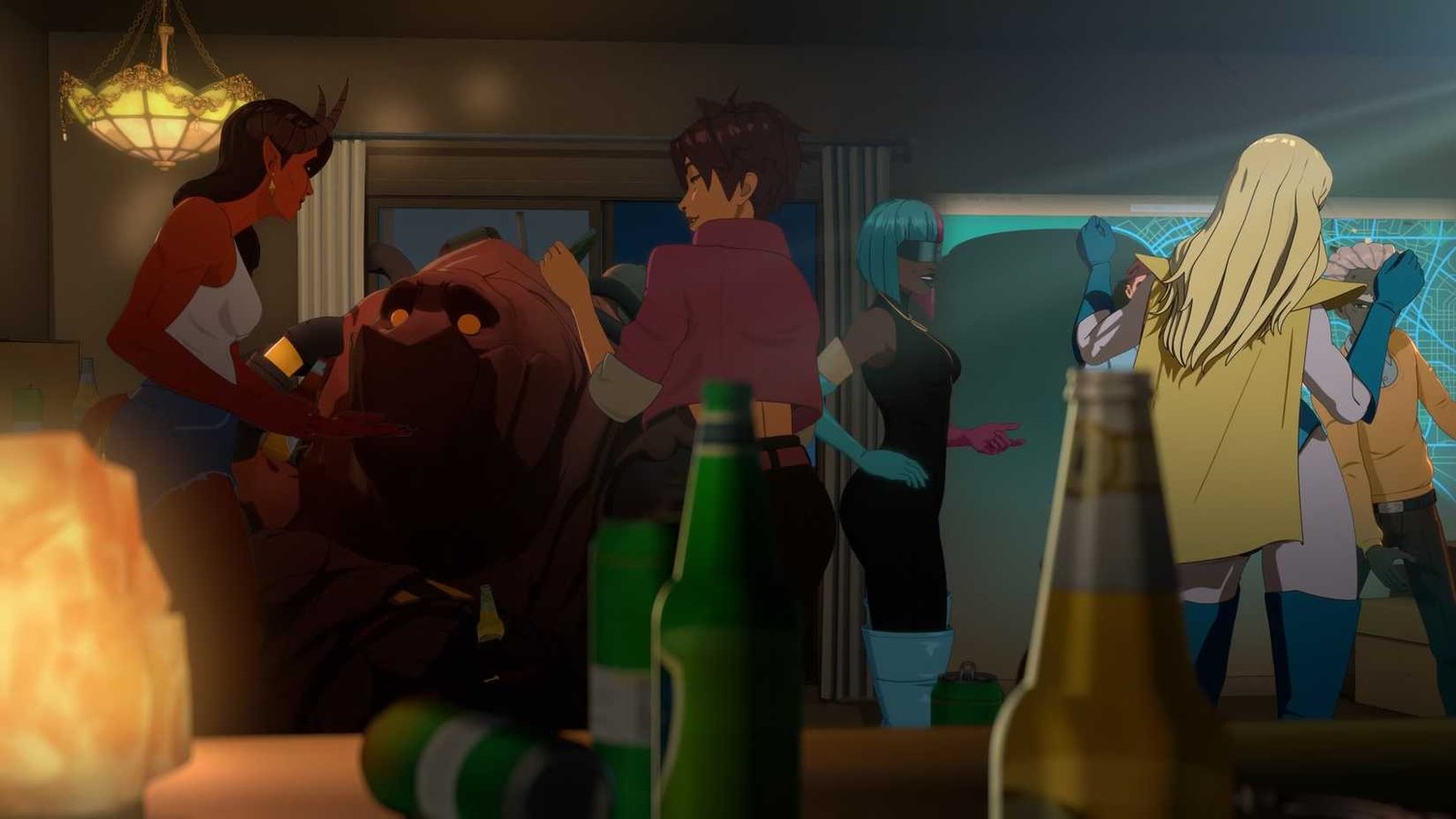
Who the heck is Mr. Whiskey? After a tense ending in Dispatch‘s seventh episode, the finale of AdHoc’s hero game opens with a giant orange cat mascot living up to his name: pouring booze into Robert Robertson’s coffee. It’s a little pick-me-up. He needs it, after the beating he got the night before. Meanwhile, Mr Whiskey sails off without a word of explanation as to who he is and why he’s there. He’s here for a reason, though. Dispatch’s creative leads told Polygon Mr Whiskey isn’t anyone in particular now. But he used to be someone special, in some of Dispatch‘s former lives.
Dispatch underwent several evolutions during its development cycle, and its first version as a TV show was, structurally, very loose. Narrative director Pierre Shorette said in a recent video interview the team planned Dispatch as a “gag of the week” project, not unlike The Office, where you could watch episodes out of order and still know who’s who, still understand the plot, still get the jokes. At first, that was about the extent of it. This initial draft had no room for a full team of heroes working with Robert, either.
“In the very original script, you basically picked your starter Pokémon,” creative director Nick Herman said. “You didn’t have a team. You showed up and [your boss] is like ‘pick someone you want to mentor.'”

Mr Whiskey was one of those starter Pokémon, along with Waterboy and Invisigal. The one-on-one concept initially survived the switch from TV show to interactive video game, but the whole thing just wasn’t working like AdHoc wanted.
“We realized at some point that the thing that we’ve always done in our career, and that people have liked the most, is the kind of narrative storytelling and interactivity that builds across a season and makes you feel invested in this larger story,” game director Dennis Lenart said. “We had almost put that aside, and I remember there being a turning point where it was like, ‘why are we doing this? What if we just take the setups that we have and start looking at it on a higher level for a season arc?'”
Dispatch needed a stronger central gameplay idea to justify it being a video game. Herman said the team landed on the emergency response concept from This Is The Police, a mechanic he saw strong potential in, but one that came with a new change in direction that required a lot more time and more characters than AdHoc originally planned for. Herman called the idea of so much extra work “annoying,” but said having a plan for networks of relationships instead of just one-on-ones helped force the team to really dig into what kind of stories they wanted to tell.
They needed to be feel-good stories, too.
“Ted Lasso and the pandemic were these huge influences on me, when I was coming out of a really sad time, just trying to figure shit out and be happy again,” Shorette said. “There was a point [during Dispatch‘s development] where there was a lot of discussions where we were just like… do we have to hurt people? Can we just have hope?”

Shorette intended Chase to die in episode six, for one thing, and the tone was generally more grungy and cynical, matching other popular superhero media at the time, like The Boys. But hope won out, and Dispatch turned into a story about shattered people with tragic pasts learning to believe in themselves and work toward a better future.
Two of the “starters” were a natural fit for that kind of story. Waterboy is a walking mass of complexes and insecurities, and Invisigal’s got enough problems to keep a therapist reliably employed for multiple lifetimes. Mr. Whiskey’s a pretty chill little guy, though. Maybe, behind that mask, he’s got a past so dreadful it’d make your toes curl, but he keeps it to himself and gets on with his job — not Z-Team material, in other words. Kitty didn’t make the cut. But at least he got to pour some whiskey once, for old time’s sake.
For those of you wondering whether Mr Whiskey is some kind of sly nod to a second season of Dispatch, as some have speculated, the answer is probably not — or, at least, AdHoc didn’t originally see him that way. The team threw all they had into the episode eight finale, thinking they might sell a few thousand copies at best and never get a chance to work with these characters again. Dispatch has sold more than 2 million copies since launch, surpassing the team’s wildest dreams for the game, but AdHoc has no firm plans for a second season just yet.