
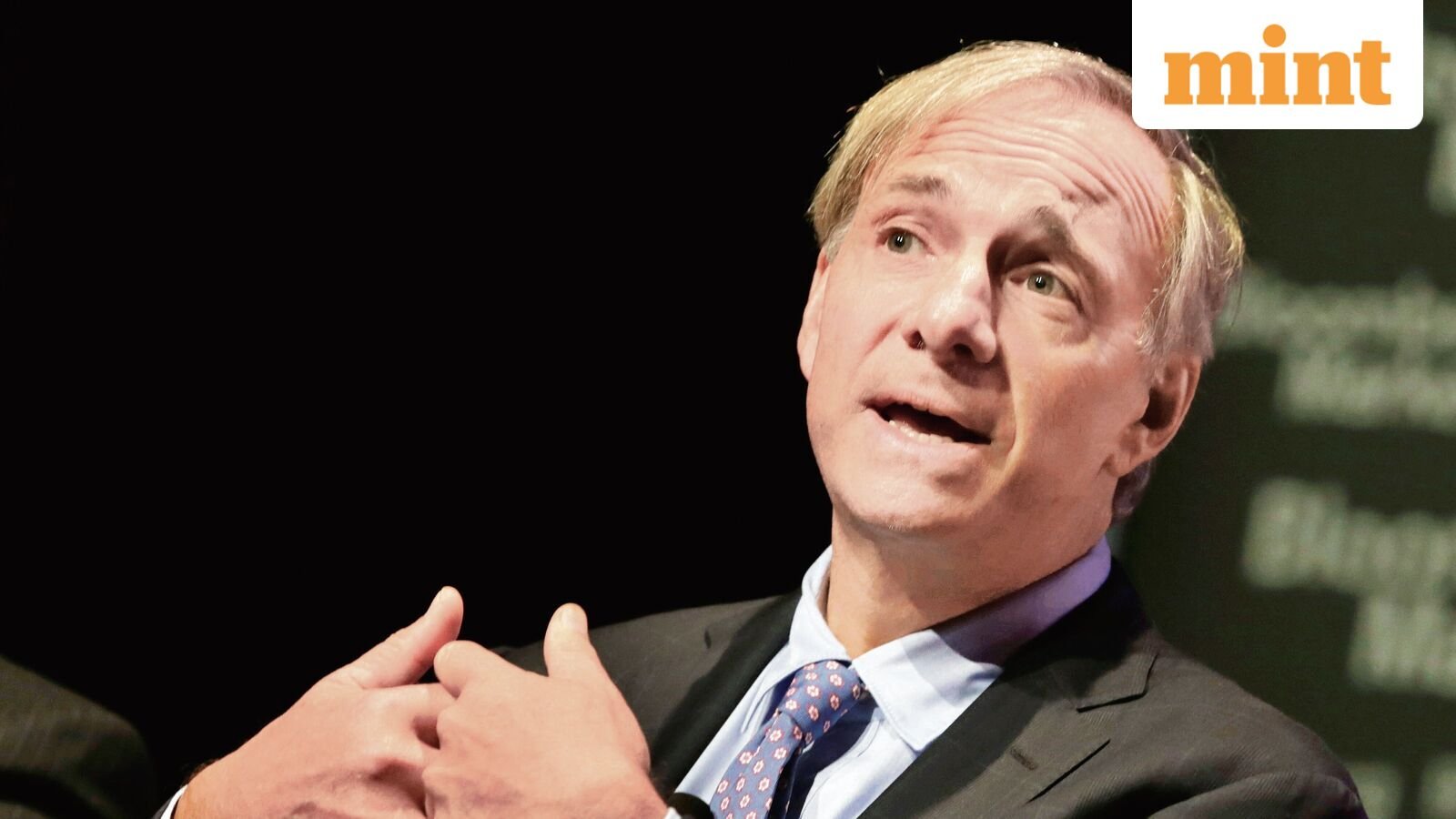
Billionaire hedge fund manager Ray Dalio has warned that a combination of inflated asset prices, excessive debt and widening wealth inequality is creating conditions for potentially severe economic, social and political unrest.
In a detailed post shared on X, the Bridgewater Associates founder drew a sharp distinction between “wealth” and “money”, arguing that modern financial markets make it very easy to create paper wealth that may not be backed by real economic value.
Dalio said bubbles typically form when the value of financial assets such as equities rises much faster than the supply of money, fuelled largely by credit. “Wealth can’t be spent, but money can,” he wrote, explaining that trouble starts when investors need actual money — often to service debt — and are forced to sell assets en masse. That selling, he said, is what turns bubbles into busts.
“Bubbles pop because the money flowing into the asset begins to dry up and the holders of stocks and/or other wealth assets need to sell them to get money for some purpose (most commonly for debt service payments),” Dalio said.
Citing the 1927-29 boom and the subsequent 1929-33 crash and Great Depression as the “classic” example, Dalio said the underlying mechanics remain the same today. Easy credit drives up asset prices, debt builds, and when returns from those assets are not sufficient to cover borrowing costs, forced deleveraging and defaults follow. Central banks then typically respond by printing money, devaluing currencies and shifting wealth through inflation and taxation.
Wealth Gap
Dalio linked this financial cycle with political risk, stressing that big wealth gaps amplify the fallout. “When there is a big wealth/money gap at the same time as there is a big wealth gap, that should be viewed as a very risky set of circumstances,” he said.
In the US, he noted, the top 10% of households earn about half of all income, hold roughly two-thirds of total wealth and close to 90% of equities, while the bottom 60% own just around 5% of wealth and equities but face stagnant prospects. That imbalance, he warned, is feeding resentment and pressure for aggressive redistribution.
Against this backdrop, Dalio flagged growing political momentum for wealth taxes in advanced economies. While he is critical of such levies, he cautioned that even a seemingly small annual tax on wealth could trigger large-scale asset sales because most household wealth is tied up in equities and other non-cash assets.
With roughly $150 trillion in US household wealth but less than $5 trillion in cash and deposits, a 1–2% wealth tax could require $1–2 trillion of liquidity annually, he argued — enough, in his view, to “pop the bubble and lead to a bust”.
Disclaimer: The views and recommendations made above are those of individual analysts or broking companies, and not of Mint. We advise investors to check with certified experts before making any investment decisions.