


Lauren spends most of her time dead in League of Legends, or equally as dead in Valorant. Don’t ask her about Vampire: The Masquerade.

Published:
In 2013, Warframe launched to a middling 64 on Metacritic. “Instantly forgettable,” “nobody would pay money for something so scrappy and generic.” The reviews are tough; bluntly, so was ours. In 2026, however, it boasts a ‘very positive’ Steam lifetime review of 91%, as well as a stable player count that sits anywhere between 60k and 75k. By 2026’s social media metrics, Warframe should have been a dead game back in 2013. Today, it sits at number 20 on Steam’s most-played charts.
You’d be forgiven for asking ‘what the hell happened?” How exactly did a ‘niche’ mission-based sci-fi shooter become a seemingly unstoppable powerhouse? There’s no single reason. Instead, it’s many coalescing into one; strands of good game and development philosophy knitting together to create something that has proven not only resilient to market decline, but beautifully consistent in its popularity. Warframe is a success story quite unlike any other; one that other developers should look at and take notes from.
Why should you play Warframe in 2026? Spoiler alert, the answer isn’t just ‘because Destiny 2’s dead.’

Let’s start at the beginning: what exactly is Warframe? Set in a far-away, interstellar future, you play as a Tenno; a human that can inhabit the body of the titular Warframes (or simply, Frames). Each one has its own unique powers and mechanics, and you can upgrade both your Frame and your gear as you progress. Gameplay is mission-based, with some MMO-lite elements; you’ll encounter other players in hub zones, and there are open-world sections like The Duviri Paradox, Venus’ Orb Vallis, and so on. The primary aim is simple: level up your gear and your Frames, grind it out to get the weapons you want, and enjoy the story. Simple on paper, somewhat complex in practice.
I’ll admit that I’m relatively new to Warframe. I picked it up after post-TennoCon (the game’s annual convention) in 2023, following the reveal of its 1999 update. I quickly bounced off of it, then returned to it again in 2024, inspired by the fan excitement and the prospect of a dating sim. Yet again, I struggled with its complexity and the sheer amount of things to do. I uninstalled it and called it a day, but couldn’t help feeling the itch as I watched 1999’s development progress. With the update’s eventual launch in December of that year, I trudged back to the PC and reinstalled; I had hours of content ahead of me before I even got to the quest, but man did I want to get there.
Then I came up against the mandatory Necramech grind in the Heart of Deimos, which essentially tasked you with farming parts of an old war machine for hours and hours on end. Again, I called it quits – the story wasn’t gripping enough to hold my interest, and the grind was, well, a grind. Then Digital Extremes removed the requirement in March of 2025.
Post-TennoCon 2025, I played over 50 hours of Warframe in a week, fueled by COVID-19 and a whole lot of Lucozade. Removing the Necramech requirement allowed me access to the next story quest, letting me progress in my adventure towards 1999. A simple change – one designed to help out newer players – completely revamped the game for me. Sure, the grind is still there – Warframe is very much a game where you get out what you put in – but it’s nowhere near as obtuse as that single quest was. Moreover, it was proof that Digital Extremes isn’t scared to evolve with the times; to remove blockers, and improve the new player experience.

Post-Deimos, that’s where Warframe ‘got good.’ Its first few hours are relatively ropey narratively, with the story lacking cohesion and missions feeling sporadic. From Natah onwards (the quest almost directly after Heart of Deimos), the core narrative begins to unfold, and it’s one that’s both gripping and oddly emotional. There’s the overarching space opera feel, sure, but it deals with themes of strife and struggle; loss in every sense. There are elements of horror in Chains of Harrow, juxtaposed with the high fantasy feel of The Duviri Paradox. There’s something for everyone here, yet, despite the differing genres, it still feels uniquely Warframe.
Then you look at 1999, the aforementioned 2024 update set in a dieselpunk version of Earth in 1999. There are tanks, parachute drops, Protoframes (humans that have the Helminth strain, but haven’t fully transitioned into Warframes) and, perhaps most importantly, an Infested, demonic boy band. It’s a stark departure from the sci-fi feel, as was the Devil’s Triad, the gothic-inspired update that followed on from it in 2025. There’s a lot going on, yet somehow I’ve never once felt like I’m not playing Warframe. That’s a testament to itself.
I asked Creative Director Rebecca Ford how the game has managed to maintain this consistent throughline, while also diversifying its offerings. “Warframe is only ever as good as its last update, but in order to keep players engaged and tailor to [players’] evolving tastes, we have to take some big, weird swings and see the response,” she says.
“Sometimes you have to make something people don’t like to know what they really resonate with! To us, failure isn’t necessarily a nail in the coffin, but an opportunity to show up and listen and demonstrate what we stand for as developers. Every miss makes us better, and every hit confirms we’re on the right track. We know and are aware of that with every update we put out and are always ready to iterate and improve.”
Failure isn’t necessarily a nail in the coffin, but an opportunity to show up.
Rebecca Ford, Warframe Creative Director
That development philosophy also ties into what makes Warframe so great. 2026 is perhaps the most risk-averse year I’ve ever seen in videogames – especially at triple-A level.
That risk-averseness is even more prominent in the multiplayer sphere – we’ve seen God knows how many ‘Classic’ modes that hinge themselves on pure nostalgia, and a general decline in excitement around big-hitter multiplayer games as a result. It seems, more generally, that as these games trundle on, they lose what makes them special. Warframe, and perhaps Dead by Daylight, are the only exceptions.
I’ve said before that Warframe is one of the few games I can’t predict. The switches in genre and themes are a part of that, but even the Warframes themselves are forever shifting. I thought I’d seen it all with Dice Maiden Koumei, who leaves everything up to the roll of a dice; then we got Follie the Shadowgrapher, who literally lets you draw your own items and throw them at other people. From here we got ‘dualframe’ Sirius & Orion, and with Tau we’re getting a noir detective in Brysko.
Despite there being 117 different Frames (including the myriad different variants), somehow no two feel the same. Even more straightforward characters like Nokko have their own unique identities; new characters aren’t just ‘better’ versions of old ones, with updated mechanics, skills, and power creep to boot. They have their own, unique souls. After 13 years of development and roster expansion, that’s quite the feat.

Placing gameplay aside, however, one of the most important elements of Warframe’s success is its community. At triple-A level, I find that developers immediately become hugely opaque – sure, they have community managers and Discord servers, but the actual ability to speak to a developer and feel heard seems nigh impossible. What Digital Extremes has done is vaguely reminiscent of Jagex with RuneScape – it consistently includes its community in every facet of the game’s design, and reacts to its sentiment accordingly.
“I’ve always said that the key to long-term success is community, but always with the asterisk that it’s never guaranteed,” Ford says. “Luck and good timing can make all the difference. The games industry is ever-evolving – trends shift, player taste modifies over time. I think the way in which we develop and are able to iterate quickly gives us a certain amount of flexibility to keep up with whatever the current flavor profile is among players.
“We’ve experienced the lowest of lows, and are lucky to have a community that’s open to sticking with us as we pave things over if we need to. We still sort of see ourselves as underdogs in a way, even despite some of our personal record-setting highs of recent years. I don’t think we’ll ever lose sight of that.”
That sense of community is no more obvious than at TennoCon. I’ve been lucky enough to attend four years in a row, and not only is the sheer scale of the event increasing, but so is its scope. London, Ontario becomes a hustle and bustle of Tenno from all walks of life, converging in one place to celebrate their favorite game. It’s a convention quite unlike any other – that sense of unity is unique to Warframe. Developers mingle with fans with a sense of real joy; I’ve sung On-lyne (the infested boy band)’s songs at a TennoConcert – something I never expected in a million years. It’s an experience that I’m always grateful to have been a part of.
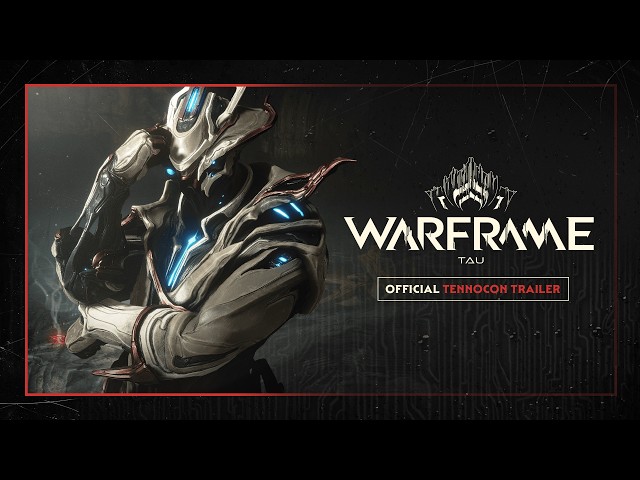
2026 and beyond throws open a new chapter for Warframe. Following the record-breaking highs of the New Peace, Destiny 2’s demise and the associated influx of new players, and the announcement of a new star system in the form of Tau, this feels like a new, exciting era for the game. In some ways, the next few months of 2026 feel transitional, with the Tau update likely landing towards the end of the year, but the hype is truly palpable.
It’s that raw excitement and love for the game that keeps me coming back. I don’t know what to expect; I don’t know what comes next. That feeling of unknowing is rare – I expect other games to give me a new map or a new battle pass, maybe a new character or two. With Warframe, the future is never certain; it’s an ever-evolving chimera that continues to dazzle and delight in equal measure.
After a run of highs, I ask Ford and her sister in crime, Community Director Megan Everett, why you should play Warframe in 2026: why is a dusty old game from 2013 worth your time? “We do our absolute best to ensure Warframe is an experience you’ll never get anywhere else, while also keeping plenty of familiar things you recognize at arm’s reach that we frequently put our own spin on,” says Ford.
“Our team delicately walks a line every update to ensure these over-the-top sci-fi stories full of a unique cast of beings, biomechanical weapons, and mutant creatures feel extremely human. We have dozens of stories tackling topics you rarely see in games in an effort to give players a window into a world where they feel seen, heard, and connected with through a community of more than tens of millions of players around the world.”
We’re not going to stop, even if those Steam charts go to zero.
Megan Everett, Warframe Community Director
“That’s a beautiful question,” Everett follows on. “My answer to that is because we’ll never give up. We’ve been fighting for 13 years to stay alive; Warframe has had the best years it’s ever had recently, and that’s something that I’m so proud to say with this development team and the community we’ve built. I’m no stranger to the narrative that this could all end tomorrow: our community could choose to walk away from us and be like ‘y’know what, it was a good ride, oh seven, see you later.’ But we, as developers, are just so passionate about this game; we’ve been passionate about it for 13 years – we’ve built the community we’ve built. And, even through those missteps, they’re by our side and they’ll let us know when we trip up!
“We love this game, we love this community. We’re going to be taking risks, we’re going to be going weird and wacky to try and make the game that our players want us to make, while also delighting and surprising them sometimes – maybe go left when they go right. You’ve gotta get crazy: we’re going to continue to do it, we’re not going to stop, even if those Steam charts go to zero – we’re still going to be trucking along over here to make the game that our players want to see.”