I’ve never been what you would call a “Star Wars guy.” As much as I enjoy George Lucas’ original film trilogy, they always struck me as perfectly fun popcorn movies rather than masterpieces of American cinema. My interest in Star Wars has only ever been casual outside of those movies, entirely tied to how interested I was in individual projects. I adored Rogue One as a standalone sci-fi war flick, dug The Mandalorian until it collapsed into fan service, and have appreciated Andor’s tighter focus on the inner politics of Star Wars.
So consider me as surprised as anyone that Star Wars: Zero Company is currently one of my favorite games of 2026. Bit Reactor’s debut game successfully adapts the Star Wars universe to a tense tactics game built from XCOM’s bones. Beyond its strong strategy systems, Zero Company is winning me over by telling the kind of Star Wars story I’m actually interested in hearing: an economic space opera.
Zero Company is a shockingly grounded Star Wars game
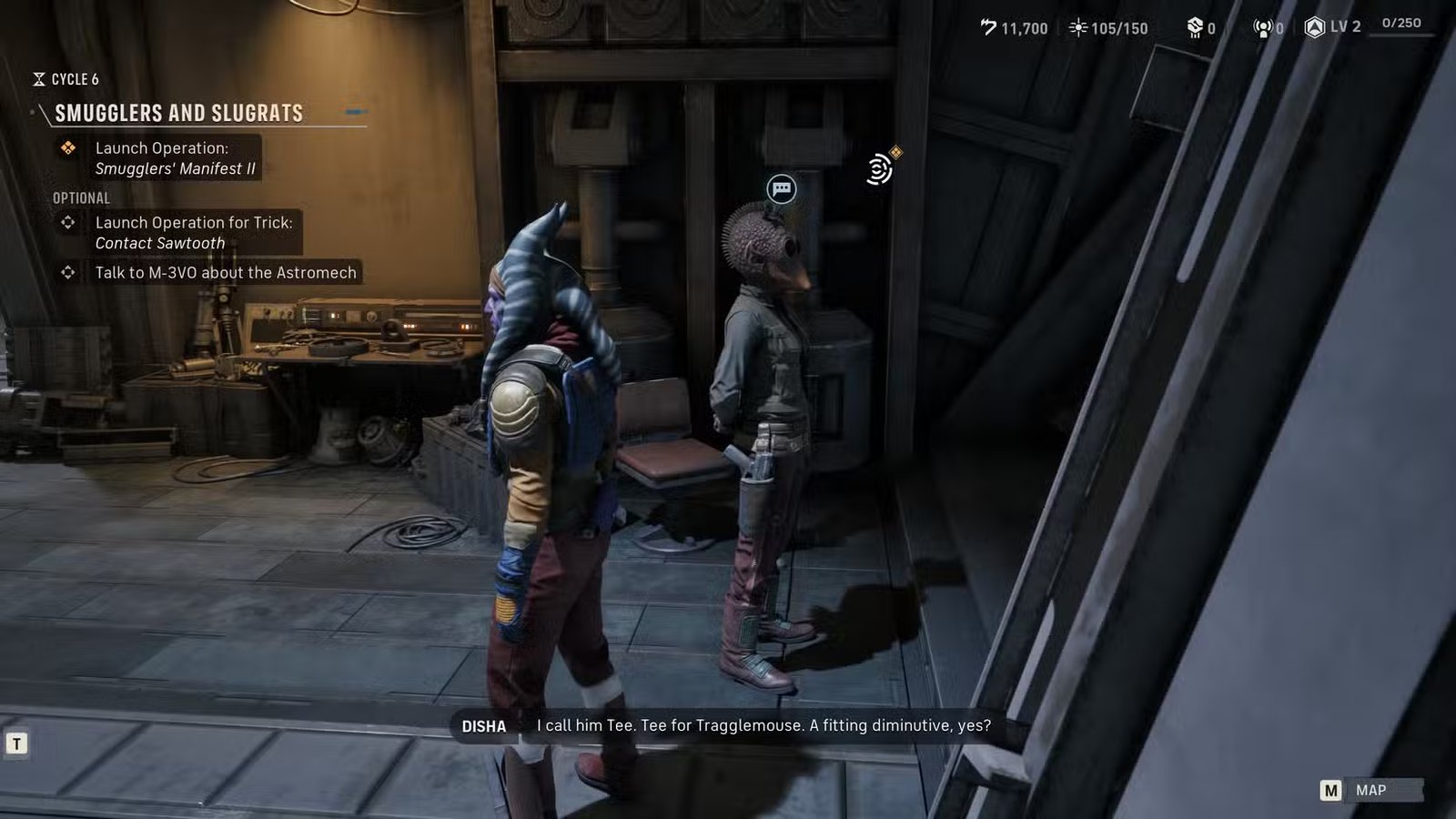
Set during the Clone Wars era, Zero Company follows a mercenary squad, led by Hawks, a hardass, sarcastic leader who will take any gig if the money is right. They are hired to stop a Separatist cult that has begun spreading a mysterious plague around. That main story isn’t exactly groundbreaking, doling out the same kind of supervillain dynamics that have kept me at arm’s length from Star Wars historically.
The real story, though, is about the mercenary group itself and its attempt to scrape by in an unforgiving universe. From the jump, it’s clear that Zero Company isn’t a profitable operation that’s making bank off of contracts. The squad is down on its luck, forced to do dirty work for the Hutts to pay off some substantial debt. Crew members like Runa walk around Zero Company’s home base complaining about economics rather than asking questions about the Shadow Plague. It’s less a sci-fi superhero story, and more a kitchen sink drama about the gig economy in the Star Wars universe.
That’s a familiar premise that I’ve appreciated in other sci-fi media. Cowboy Bebop, for instance, plays with that dynamic to great effect. The anime, about a bounty hunting crew, is filled with good week-to-week mysteries and a great central story, but my favorite moments in the series are when we see the crew sitting around their ship trying to figure out how to keep their operation afloat with inconsistent income. It adds a human element to the series that’s easy to cling onto even in the series’ most out-there moments. I’ve spent time as a freelancer; I know how high the stakes are when you don’t know when you’ll get paid next.
That idea has pulled me into Zero Company just as Andor once did with its more grounded political storytelling. Sure, grand stories about Jedi using their powers to take down evil emperors are fun, but it always tickles me to see the mundane on display in an over-the-top universe filled with weird critters. It’s a reminder that the titular wars referenced in the title aren’t just fought between superpowered heroes and villains. Those wars have quieter consequences that bleed down to the seldom-seen civilians of the universe.

I recognize that what I’m saying here probably makes Zero Company sound brutally boring. (Maybe it will be to those who come to Star Wars for lightsaber battles!) But that premise has helped me find a lot of humor and sincerity in my playthrough so far. I love the little chats with my crewmates, where they tell me about their gambling exploits between missions. I love watching Hawks pick and choose gigs, making tough moral choices to keep the credits coming in. And I love feeling small in an enormous intergalactic conflict that I have no power to stop. My crew and I are just trying to get by, and that’s a familiar feeling that helps me better understand the personal stakes present in the Star Wars universe.
Enough with the Jedi stories! Tell me about a local cantina manager trying to hold the peace in a powder keg environment. Let me follow the merchant who sells scrap to shady droid manufacturers. Show me what happens when soldiers come home from war and have to live in the real world. (The racing roguelike Star Wars Galactic Racer will, in fact, scratch that itch next month.) If you’re going to have a universe this sprawling and fully realized, let me see how everyday people are getting by in a world held together by hope.