


Ken coolly serves the hottest news stories and has played, we think, every game ever made.

Published:
World of Warcraft Midnight marked a major turning point for Blizzard in one specific, important way: the death of the combat add-on. Tools such as WeakAuras and Deadly Boss Mods have largely been synonymous with the MMORPG for the last two decades, helping players to solve fight mechanics and figure out what they should be doing during dungeons and raids. With the latest expansion, Blizzard decided these would no longer be allowed, in an attempt to halt the ever-escalating arms race between designers and mod makers. Now the dust has settled, I asked Game Director Ion Hazzikostas and Associate Game Director Paul Kubit how they’re feeling about the decision.
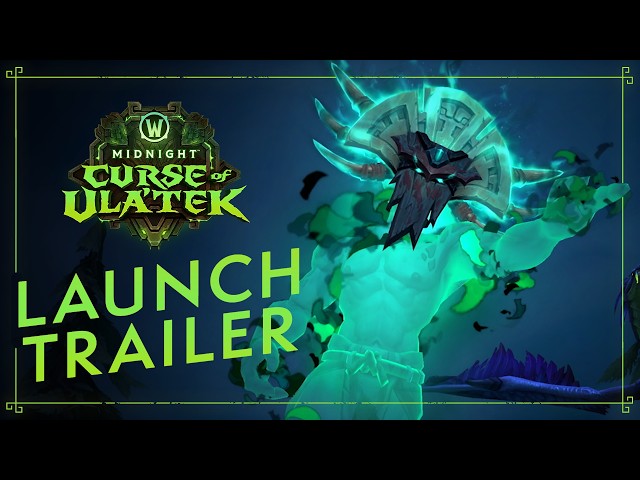
For context, my online sit-down with the duo happened right at the climax of the recent Venomous Abyss Race to World First. With seven of the eight bosses defeated on Mythic difficulty, it was down to the wire to see whether Echo or Team Liquid would be the first to overcome Ula’tek and come out champions of World of Warcraft patch 12.1. At the time, Echo had a clear lead, and Hazzikostas was confident the competition would be over within 24 hours; he was right, although ultimately it was Team Liquid who snatched victory.
Kubit says the race played out “pretty close” to expectations. “You never really know 100% what to expect,” he explains, “and some of the people participating at this level have strategies that boggle the mind.” The two climactic fights, The Coiled Altar and Ula’tek, ended up “super challenging,” he remarks, but he was satisfied by the variety of teams experimenting with different classes, loadouts, and strategies to try and squeeze those last few percentage points of DPS out.

Does the success of Midnight’s raids prove the add-on changes were ultimately the right move? “I’m obviously biased, but I think so,” Hazzikostas responds. He says it’s been successful in resetting expectations “around a new norm,” although acknowledges that there is still room to improve. “What we’ve tried to minimize and hopefully eventually eliminate is the competitive advantage, the computational stuff that add-ons do.
“Looking at how this tier is playing out so far, I think we’re seeing largely what we’d hoped for. It’s telling watching the race how much more vocal the raid leaders are than they were a year ago – actually calling things. Actually, frankly, raid leading. I’m curious to hear what folks like (Team Liquid raid leader) Max and (Echo raid leader) Scripe and others in these top guilds have to say about reflecting on that once this is all over.”
Hazzikostas recalls that in past RWF tournaments, add-ons were automating a lot of that process. “At times, when they were really locked in, the raid leaders would almost be silent because it was the add-ons doing the work, having the audio alerts, telling players where to run, and so forth. That was stripping out part of what’s been, you know, the core human co-operation of raiding since day one, right? ‘More DOTs. Stop DOTs.’ You don’t want an add-on telling you that. You need your raid leader yelling that in your ear.”

That doesn’t mean Hazzikostas and his team won’t budge on what’s allowed. “One cool thing we were happy to do in Curse of Ula’tek was to provide add-on authors with a really robust framework to still cue off of specific spells for things like audio alerts, simple visuals, things that help with accessibility.” He maintains that “addons remain a robust and vital part of the World of Warcraft ecosystem,” just from a more presentational standpoint, rather than solving mechanics and puzzles for you.
“Our players are very clever – these guilds [in RWF] in particular are very, very clever, and they will find some loopholes,” he acknowledges. “Sometimes they’re fine, and other times it’s something that we know we need to close, or otherwise it’s going to become the norm for how people approach a given encounter down the line. But I think that by and large we’re not expecting big changes in this space any more.”
Blizzard still wants to chip away at restoring “benign functionality that was sort of collateral damage” from the changes. Hazzikostas points to Augmentation Evokers being able to track their contributions to a group as one such example. “That’s the sort of thing that used to be possible that was completely harmless, and was unfortunately collateral damage as part of these broader efforts. That’s where our efforts are focused.”
“The back half of the add-on initiative isn’t just adjusting the way that the API works, but also shoring up our own systems,” Kubit adds. “Adding in things like the cooldown manager and damage meters and what have you – certainly the lion’s share of that happened early on in Midnight’s development, but we will never be done with adding functionality to the UI.” He promises that as Midnight rolls into The Last Titan, “you’re going to continue to see the UI evolve alongside the players.”
Another big change from the raiding perspective came just last week. Blizzard changed the rules on bonus rolls to restrict them only to encounters where you’re eligible to receive loot, meaning they cannot be used on attempts after a lockout. I ask whether this indicates plans to continue tweaking the pace of progression in Midnight. Kubit says the team is “still observing and watching as people play,” and trying to judge how valuable bonus rolls feel against other tools such as the Great Vault.
“We’re still at a place where most folks – at least a lot of folks – have not completed their four-piece set, and so that changes the way that you think about the things you choose from your Great Vault versus whether you want to take a bonus roll or not.” Kubit says Blizzard is “really happy with seeing people being excited about the raid and being excited about getting raid loot from their Great Vault,” but also acknowledges the downside that it “separates the achievement from the reward.”

“It doesn’t feel like you remember ‘killing a boss and then looting a sword from its corpse’ feeling, whereas the bonus roll is much closer to that. But also there’s something fun about the Great Vault, in seeing a cool piece of loot and wanting to take it, and if you feel like the system design is leading you to a place where it feels like that is a bad choice, or an ‘inefficient’ choice, then maybe we have to look at how that works and adjust it in the future.”
With patch 12.1 now largely in the books, all eyes are on Blizzcon this coming weekend, when we’ll learn what the rest of World of Warcraft Midnight looks like. “We’ll have a lot more to talk about what the year ahead holds,” Hazzikostas promises. If you’re curious to learn how the pair feel about the response to Curse of Ula’tek on the whole, and some of the features Blizzard is cooking up as we move towards the final act of The Worldsoul Saga, be sure to read the other half of my interview.