
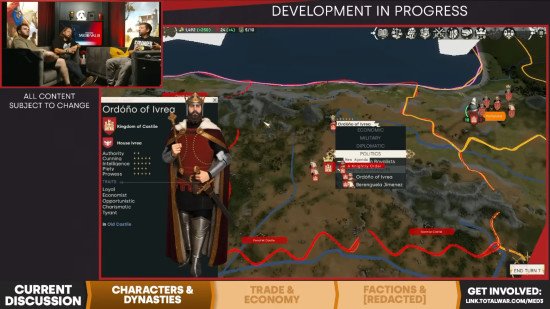
Creative Assembly is back with a fresh Total War Medieval 3 update. The developer has been keeping quiet in recent months, working on the upcoming strategy game behind the scenes, but now it’s gearing up for a new livestream. That’ll dig more deeply into the likes of the campaign and using castles, with a fresh look at the latest build, but before that Game Director Pawel Wojs and Creative Director Leif Walter are here to talk about the ways in which diplomacy will impact your medieval politics.
“Diplomacy is one of the key systems to make the game world feel alive,” Walter begins. “It is the arena of geopolitical storytelling, and it is how your actions become relevant in the eyes of the wider world.” CA is aiming to reach new heights in this regard with Total War: Medieval 3, and it’s using Three Kingdoms as the basis to build on. “It was a game defined by its dynamic use of diplomacy, where coalitions, alliances and relationships between characters and factions could fundamentally change the course of a campaign.”
Walter is aiming to start with those foundations and build from there, with three key focuses: believable agendas, integration into the world, and momentum. Starting with the first, he explains that diplomacy thrives on natural-feeling interactions between various parties. “We want to ensure that there is a sense of ‘agenda’ in other factions, a sense of self-preservation and a sense of pursuing clear goals.” Computer-controlled factions should feel less like they exist to be antagonists to the player, and more like the AI is working to pursue its own interests.

The knock-on effect of this is that you’ll be able to infer those intentions more clearly by tracking the various diplomatic actions that a faction has taken. “For example, a weak faction will seek peace with the player to save itself, or will desperately seek allies, rather than stubbornly being entrenched in a war it is bound to lose,” Walter writes. “Diplomacy thrives on believable interactions, and believable AI counterparts.”
On the second point, Walter refers to diplomacy as “more than just war and peace.” Your actions, and those of the other leaders following their respective agendas, will impact your political situation, along with the way dynasties and families influence your realm. By excelling at diplomacy specifically, you’ll see benefits in other areas from your economy to tech and recruitment.
CA also wants to capture the interplay between diplomacy and geopolitics, considering the distance and current availability of travel between regions. A travelling diplomat might be able to build positive relations with a faraway realm, for example, but it’ll be largely meaningless until you’re able to link up. Once ports and trade routes are established, you can begin to make more meaningful exchanges, opening the door to the likes of recruiting foreign units or spreading culture.
Finally, Walter touches on momentum. “Diplomacy is strategic, but also opportunistic. Diplomacy is about setting long-term plans and ambitions into plan, while also having them disrupted by short-term opportunities and challenges.” CA wants preparation to feel valuable; by setting pieces in motion and keeping watch on global shifts, you can ensure your grander plans aren’t thrown into jeopardy by ripple effects such as a succession crisis in a neighbouring kingdom.
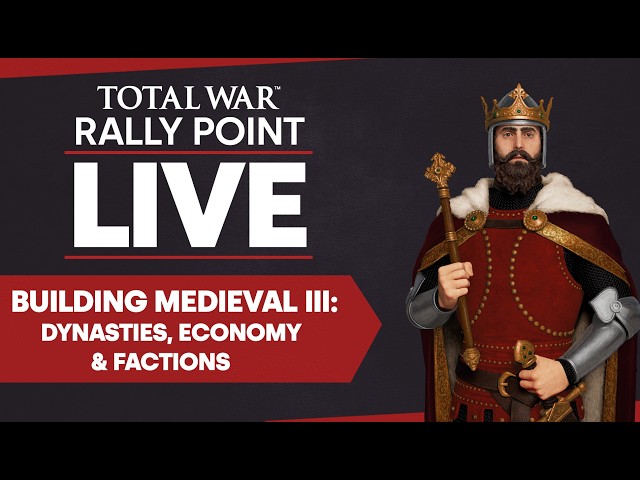
If you’ve been craving more Total War: Medieval 3 news, you’re in luck, because the Building Medieval 3 livestream is set to return this coming week. Creative Assembly will also be revealing the results of its recent faction survey doing the show, so don’t miss out.