
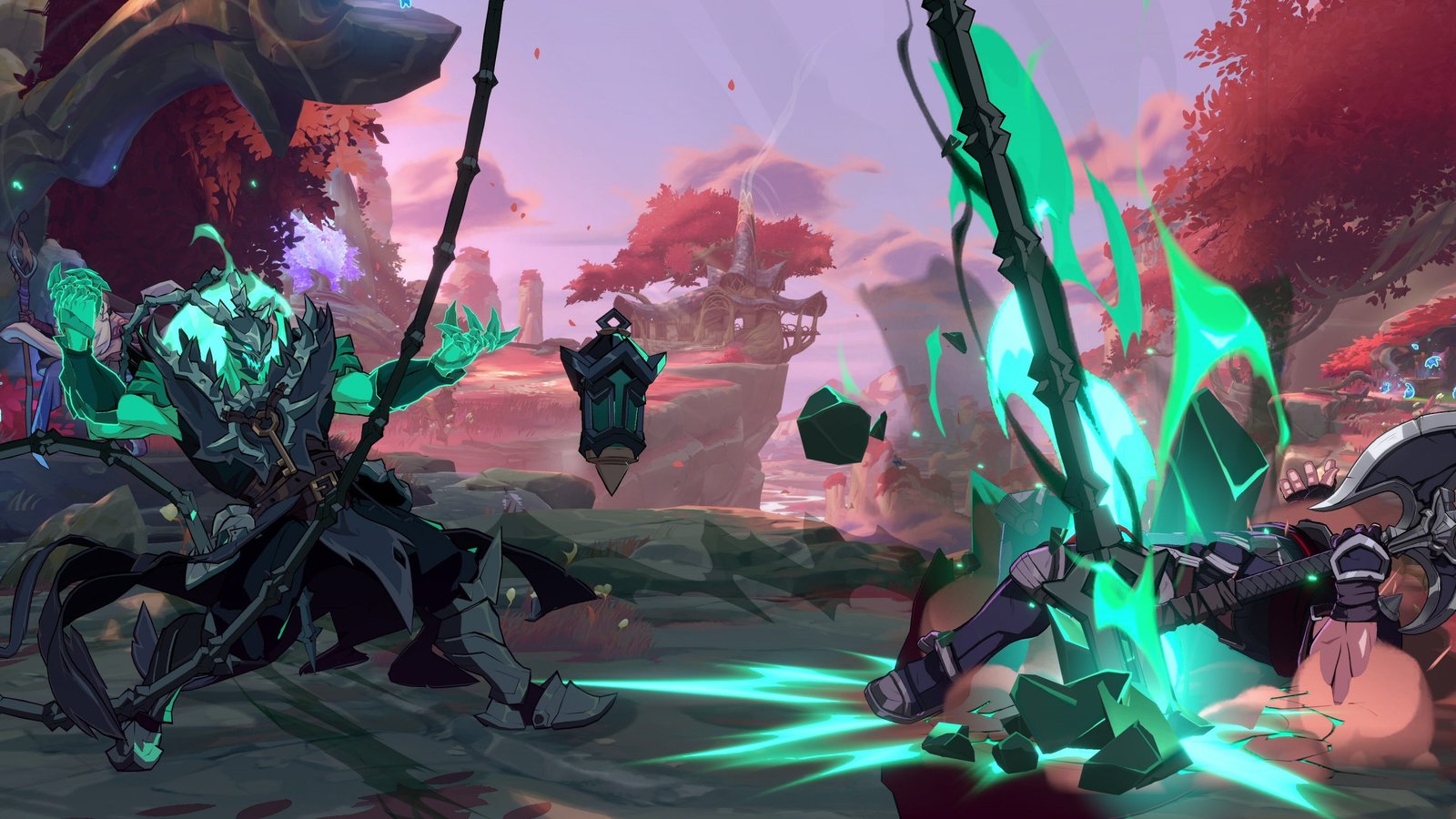
The 2XKO story is a sad one. In many ways, it felt somewhat doomed to fail – the fighting game market, while expansive, is hard to crack, and while 2XKO had impeccable style and the might of League of Legends behind it, it never really felt like the right fit for Riot. I can see the logic: the FGC has its own esports leagues, and Riot excels at esports-worthy videogames. It’s also a sphere that’s been relatively stagnant, dominated by the Tekkens and Street Fighters. I see the logic; unfortunately, I just never saw 2XKO taking off, and given that development ends at the end of the year, it’s clear that, sadly, its run its course.
In a new interview at PAX West, Kind of Funny’s Greg Miller questions Riot Games Co-Founder, Co-Chairman, and CPO Marc ‘Tryndamere’ Merrill about 2XKO. “When you look back over these past 20 years, how do you define your ‘mistakes,'” Miller asks. “Let’s talk about 2XKO: how do we talk about 2XKO?”

“I wouldn’t characterize 2XKO as a mistake,” Merrill responds. He goes on to tell the story of brothers Tom and Tony Cannon, two of EVO’s four founders. “They couldn’t help themselves but want to serve the community, so when Brandon [Beck, Riot Games Co-Founder] and I met them, we were like ‘oh my God, brothers; we’re from the same soul tree.’
“The question of course became, what if we could make it better to be a fighting game player, what would that look like? We thought there were a lot of opportunities in and around the competitive scene, you’d have thought that there would have been benefits for the free-to-play model; that the League IP would have been cool for League players and players in the FGC.

“We delivered a game that’s beautiful, that took risks with the tag system and all sorts of stuff, but one of the challenges with the free-to-play space and/or the live service model in general is that, unless you do something so incredible… especially in a really competitive world where 20,000 plus games are launched every year on Steam, and there’s an infinite amount of social media content, and YouTube…” “You’re not just competing against games,” Miller chimes in. “Yeah,” Merrill replies.
“You’re competing for people’s attention and time, and that’s a really high bar. You have to get so many things right to get enough critical mass to build the community and really have it turn into something and be sustainable in the long term. 2XKO unfortunately didn’t do that, but that doesn’t mean it’s not a great game – that’s why we’re refunding and we’re keeping the game live. It doesn’t mean that the intention and effort to serve the live FGC wasn’t utterly in the hearts of the Cannons, Rioters, and us the entire time.
“We’re not going to bat a thousand; we’re not going to get everything right, but that doesn’t mean we’re not proud of it, and it doesn’t mean that we’re not going to go and take big swings. I know that’s another thing, people are like ‘I’m concerned about what this means for other games.’ Well, you shouldn’t be, because if there’s one thing about Riot, because of that unquenchable desire to serve and try and make it better, we’re constantly pushing ourselves to find ways to do that, and we’ve got a lot of cool stuff in the pipe.”
Merrill’s point rings true. Last year I spoke to Theorycraft Games about its now-shuttered MOBA brawler, Supervive which, at launch, felt like it was going to become the first real League of Legends rival in over a decade. Ahead of the game’s closure, Executive Producer Jessica ‘Safelocked’ Nam (a former Rioter) also expressed issues with cutting through the “new input” noise, with the constant stream of internet content making it so much harder to stand out.
While the idea of ‘constant content’ affects single-player games, too, it’s massively impacted online multiplayer. Genre stalwarts remain ever-popular – a category that League of Legends and Valorant both fall into – but scaling a new live service title feels like it’s never been harder. I’ve argued before that Valorant launched at the perfect time, capitalizing on both the COVID audience and the hunger for a new shooter. Conversely 2XKO simply took too long to develop, and was aimed at a relatively niche audience with no immediate League of Legends leanings. It’s a shame; I liked 2XKO, and I loved its style. It simply wasn’t to be.