


Lauren spends most of her time dead in League of Legends, or equally as dead in Valorant. Don’t ask her about Vampire: The Masquerade.

Published:
My love affair with Baldur’s Gate 3 began two years later than everyone else’s. Truth is, I hated my first playthrough. From the awkward top-down camera, alongside the seemingly never-ending combat sequences, and deluge of D&D jargon, I struggled to engage at all. On paper it ticked all of the boxes: Dungeons and Dragons, deep inter-companion relationships, and a soaring, high fantasy story. In practice, however, it was a drag – so much so that I retired it to the ‘uninstalled’ graveyard of my Steam library for around two years, with no plans to return.
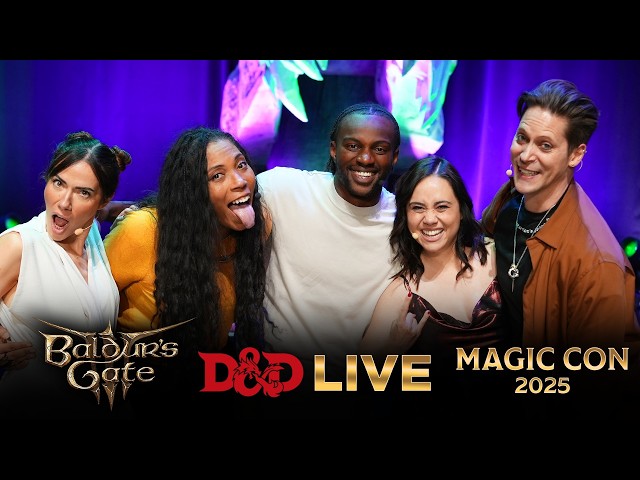
Then, in 2025 on a train to Birmingham for RuneScape’s Runefest, I came across a video of Critical Role mainstay Aabria Iyengar playing D&D with several members of the core Baldur’s Gate 3 cast. It was a long video – perfect for whiling away the hours stuck on a train. I let the hours slip by, slowly falling in love with Devora Wilde’s chaotic antics as Lae’zel, and Neil Newbon (Astarion)’s futile attempts to get her back on the rails. I knew, then and there, that I wanted to replay Baldur’s Gate 3.
The result was an almost 200-hour long adventure, where I explored every nook and cranny, recruited every companion, definitely didn’t get feisty with both Mizora and the Drow Twins. It felt amazing. I’ve asked myself many times: ‘what went wrong with that first playthrough? Why didn’t I like the game?’ On the game’s third anniversary, I think I finally have answers.
I’ll start off by saying that I wasn’t big into D&D. I’m hyper aware of how TTRPG systems work, but hadn’t played D&D before starting Baldur’s Gate 3. In hindsight, I’d argue that you don’t need an in-depth knowledge of WoTC’s seminal tabletop game to play and understand Baldur’s Gate 3, but it helps.
While I locked in a Gloomstalker Ranger – a notoriously terrible class – I found that, even in my D-tier state, I could pull off more impressive combos thanks to my D&D experience. I knew that a sneaky Misty Step could get me the high ground, and in turn advantage – a squishy archer’s dream come true. I knew how spells worked, and what a ‘cantrip’ meant. I knew who Elminster was, and began to understand the wider world around me. Sure, the story itself and the expansiveness of the setting are wonders in themselves, but without that D&D experience it felt a little too overwhelming for me to fully grasp.

Then there was accepting the game’s limitless freedom. On my first playthrough, I actively stuck to the beaten track, wandering from Gale’s flailing hand to the Grove, to the Goblin Camp, and back again. I’m someone that finds open-world games a little overwhelming; I like to go place, do a thing, and come back. That mindset, however, meant that I missed out on recruiting Lae’zel on my first playthrough, as well as Minthara – two of my favorite characters.
On my second play through I forced myself to explore. I came across that barn with the ogre and the bugbear. I found the exsanguinated boar, kickstarting more conversations with Astarion, and encountered the Hag and her weird menagerie. That just within Act 1 – things that I’d never seen, story strands that I had never encountered before, and wouldn’t have encountered if I’d remained closed-off.
The chaotic feel of a D&D table is what encouraged me to actually explore in BG3 – knowing that you can wander off of the beaten path, or stack boxes to jump over an impenetrable castle wall. I’d forgotten that loose, freeflowing approach to videogames – it was reminiscent of my time with Dragon Age: Origins, and reminded me why I love that game so much. In many ways, it reignited that spirit of adventure and exploration – one dampened by years of playing a specific role in League of Legends or Overwatch. Where League needs me to be in the bot lane and get my rotations right, Baldur’s Gate lets me explore at my own pace.

If I found Act 1 a little bit of a slow burner, the world began to pull me in. Initially, I found the Underdark tedious, and even the Grove versus Goblin saga fell flat. Then I began to pick up on the little details, like running into Arabella (the little Tiefling who stole the Drudic idol in Act 1) in Act 2. Learning that her parents – people I’d helped – had been murdered at the hands of the House of Healing’s twisted inhabitants made me genuinely angry. It was these little moments that made me start to really care.
It’s a similar story with the game’s companions. I played before the game’s ‘anti-horny’ patch dropped, so everyone and their bear was vying for a piece of me anytime I returned to camp. While I’ll absolutely take the compliment, it meant that the romance system felt skin-deep – I had to work to make Morrigan like me in Dragon Age. In BG3, I hadn’t even spoken to Wyll yet somehow he had fallen head-over-heels in love with me.
Post-horny fix patch, I feel like the game’s characters actually have the depth they were supposed to have, and are instead fully-realized entities instead of rampantly pent-up romance check boxes. It’s no secret that Neil Newbon’s performance as Astarion is absolutely stunning, but even Samantha Béart’s Karlach – who I initially didn’t quite gel with – has an absolutely spectacular character arc that now, thankfully, has a good ending. BG3’s romance system is what I’ve been missing post-DA: Origins – it beats out DA2, and even Inquisition, purely for the intensity of the associated performances and the skill behind the writing. It set the standard for videogame acting going forward: in many ways, BG3’s romance is revolutionary.
All of this is to say that, despite hating Baldur’s Gate 3 initially, it has cemented itself as one of my favorite games of all time. It’s not perfect. I find that Act 3 drags, and unless I was paying with friends, that 200-hour runtime is pretty brutal. Yet, it is, for all intents and purposes, the quintessential D&D game, perfectly encapsulating the freedom and chaos of the tabletop game, while simultaneously giving life to both its characters and its world.
Three years on, it’s a better game than it was at launch – myriad patches, ending switchups, and new subclasses mean that it’s a better-rounded, more customizable experience. Drunk Monk (Way of the Drunken Master) is a fantastic late addition, for example, and Swashbuckler certainly calls to me. These didn’t exist when I played the first time around, otherwise I would have for sure ditched my Gloomstalker. Bless her, she worked really damn hard.
It’s not just the game at your fingertips that makes BG3 special. It’s the influence on pop culture. We’ve seen a D&D renaissance, a resurgence in TTRPG live plays and discussion around tabletop in general. We’ve seen videogame acting be taken seriously, and the emergence of some wildly impressive new talent. Baldur’s Gate 3 isn’t just a spectacular videogame. It’s a cultural phenomenon.
In 2026, no game has quite managed to topple BG3 in terms of sheer depth and breadth, and I doubt we’ll see any manage it for quite some time. I feel sorry for the team who take up the mantle to Baldur’s Gate 4.