
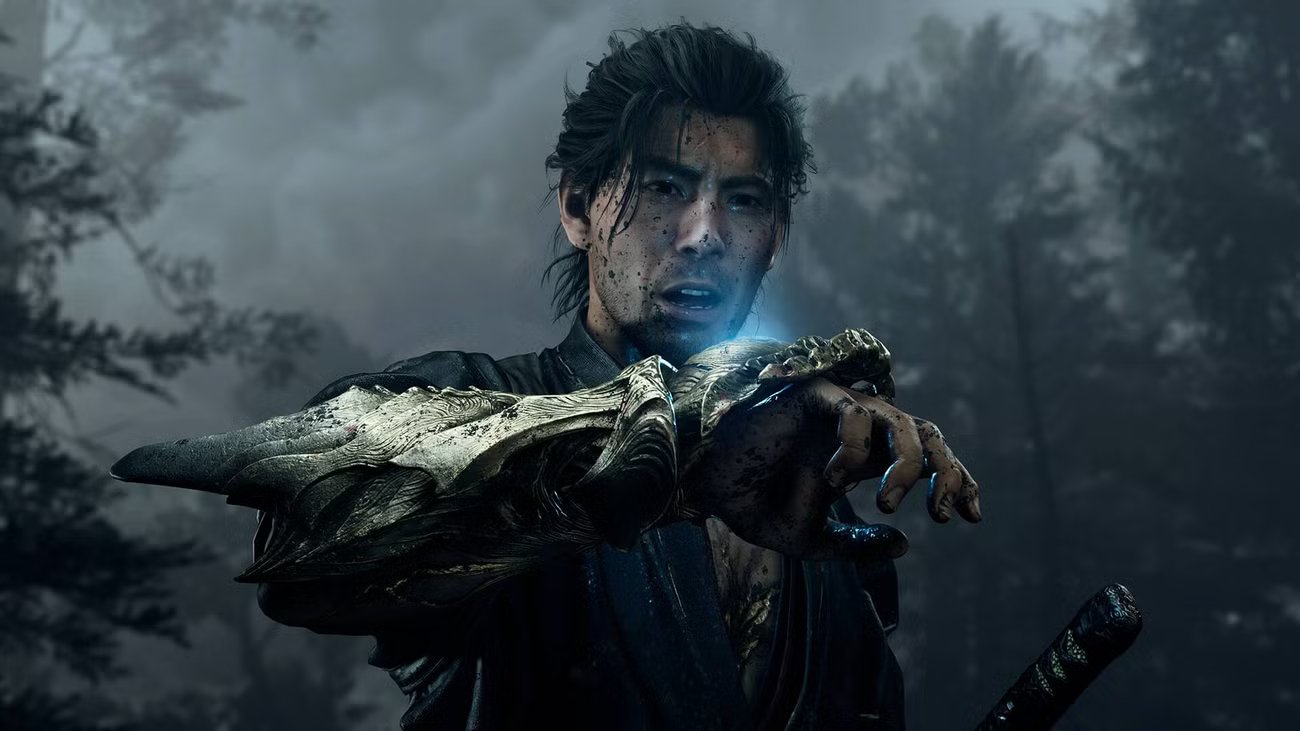
Late in Onimusha: Way of the Sword, when I was growing weary from facing down the same few demonic bosses in demanding duels, I found some much-needed wisdom in a stone slate. “When going through hell, one must keep going,” it told me.
It’s the advice I needed to hear 20 hours into Capcom’s new samurai action game, because Way of the Sword can feel like hell in its hardest moments. The franchise revival does away with the Resident Evil-like exploration of its PS2-era games in favor of a typical modern boss gauntlet filled with parries. Even when your power is rising through piecemeal RPG progression, it always feels like you’re in the duel of your life. And as old foes you swear you vanquished already rear their ugly heads again, you have no choice but to give up or stand and fight.
I chose to keep going until the end, but Way of the Sword struggled to earn my patience in a promising action game bogged down by needless repetition. Sometimes, it’s a battle worth surviving. Powerful swordplay moves in lockstep with thematic takeaways about the nature of strength, making for the rare hard game that actually has something to say about its own difficulty. But by the end of my quest, I couldn’t say that I felt enriched from all that suffering.
This is the way
Way of the Sword is more or less a total reboot for the Onimusha series, which debuted in 2001 and largely wrapped up in 2006 after four mainline games. The originals were tight horror-action games with fixed camera angles and puzzles — Resident Evil’s samurai cousins. Way of the Sword does away with that in favor of a more modern action RPG, one that contains shades of Dark Souls, Respawn’s Star Wars Jedi games, and the Yakuza series. The new structure, which has players bouncing between linear levels and a compact hub village that fills up with side-quests and collectible dogs between missions, comes together well enough by the midway point, though it’s not quite as distinct as previous Onimusha games.
The story revolves around Miyamoto Musashi, a real-life swordsman who gets pulled into the series’ demonic fiction. (His face is modeled after Toshirō Mifune, the late actor who played Musashi and countless other samurai on film.) Depicted as an absolute scamp, Musashi pays the price for his brashness when a near-death experience leaves him cuffed to a talking Oni gauntlet that augments his power. That’s frustrating for a proud swordsman who respects the art of the duel, so he sets out on a quest to remove it. Instead, he gets roped into a monster-killing mission, as his newfound power makes him the perfect enemy against the Genma, powerful monsters covering Edo-era Kyoto in malice.

The best moments in Way of the Sword are the ones that play with Musashi as an unwilling hero. Voice actor Kenichiro Thomson plays the legend as a cheeky bastard who doesn’t see much of a point in risking his life to fight grotesque beasts. A typical hero’s journey ensues, where Musashi has to rediscover his love of fighting and find the fun in his new demon-killing gig. There are some bright moments of playful charm as a smirking Musashi comes to terms with the realization that fighting, in fact, kicks ass.
The story gets more convoluted from there, with Way of the Sword’s second half bogged down by long-winded Genma folklore, but its broader themes are a better fit for its action. Musashi’s character arc is in harmony with Way of the Sword’s razor-sharp duels. On paper, it doesn’t sound all that different from your average action RPG. Musashi can perform one- or two-handed attacks, dodge, block, parry, and heal like virtually every action game made in FromSoftware’s inescapable shadow. It’s not a Soulslike, though, even if some of the boss design feels indebted to Dark Souls. (I regret to inform you that Way of the Sword has its own take on the Godskin Duo, Elden Ring’s worst fight.)
Battles are more focused on countering than cowering. Musashi has several ways to turn an attack back on an enemy, which transforms battles into a game of close observation. Dodge at the last moment and Musashi can hit back with a devastating counter-slash. Swing your sword when you’re about to get hit and Musashi will clash swords with his opponent and overtake them if you can button mash fast enough. Use your Oni strength when an enemy is blocking to break their guard entirely. Parrying was my maneuver of choice, just because it’s particularly satisfying to pull off. Sparks fly off your sword as a chunky sound accentuates your block. It’s a flexible combat system that makes sense for a real (albeit fictionalized) figure like Musashi. The most skilled player will be able to tear through bosses without taking so much as a scratch.
Learning to love the challenge
That’s harder than it sounds, of course. Way of the Sword tests you at every turn, pitting you against ruthless bosses that never stop pressing the attack. Those duels are an endurance test that have you conserving your stamina to maintain your blocking power, while chipping away at your opponent’s to deliver a critical strike. Clashes against demons like Rasho-gan, a Genma that tricks villagers into giving up their limbs in exchange for wishes, are thrilling dances where you can’t miss a step. “All you can do is learn to love the challenge,” Musashi says at one point, laying the entire thesis of the game bare. I was able to embrace the tough fights for a good chunk of the adventure. Nailing every counter technique, finding the right special Oni attack to augment my combat style, and gradually unlocking skills that turned Musashi into a force of nature gave me the motivation I needed to keep pushing ahead.
I appreciate how Way of the Sword uses its difficulty to communicate to players, something few tough games give much thought to. Musashi spends the story in a mild existential crisis as he tries to figure out his relationship to strength now that he has a soul-sucking gauntlet strapped to his arm. His superpower feels like a cheat that bypasses the honorable nature of a life-or-death duel. It’s supposed to hurt; “To live is to suffer,” another character tells him. Way of the Sword asks players to embrace that mantra, summoning their inner strength to overcome crushing odds. To vanquish a hard boss after an hour of failed attempts is to truly feel alive.
It feels like a great 12-hour game stretched to an exhausting 25-hour one.
But the struggles start to outweigh the triumphs as the hours press on thanks to compounding frustrations. Healing, for instance, is practically a death sentence for the bulk of the adventure. It’s a strangely sensitive button press, and the process can be easily canceled out without you noticing. I lost plenty of fights after stopping to heal, only to realize that my button press didn’t take as I got nailed by an attack while checking the tiny UI in the corner of the screen. That, and other nuisances, can be alleviated by late-game skill upgrades that feel more like unlockable quality of life improvements than meaningful perks.
It gets harder to live with those problems when fights become routine. There’s very little enemy variety considering how long the game is, eventually turning interstitial fights against common demons into routine busy work. Even worse is that Way of the Sword recycles its bosses, repeatedly bringing back old foes with no changes other than increased power to match your own growth. Two particular sub-bosses pop back up over and over again, acting only as long barriers to obtaining crafting materials needed to upgrade your power.
The RPG progression system isn’t worth all that effort. Your health, strength, and Oni power can all be upgraded by tracking down materials in chests and completing sidequests, but each upgrade is so incremental that you’ll never really feel a difference. And since the enemies are always getting stronger alongside you, that leaves the difficulty level flat throughout. (You can either play on a breezy Story setting, or a very hard Action mode initially.) There’s no sense of growth in a game about that very subject.

Those nitpicks stand in for Way of the Sword’s big picture problem: It feels like a great 12-hour game stretched to an exhausting 25-hour one. Piecemeal progression and recycled bosses go hand-in-hand with repetitive rift-closing missions and backtracks through previous levels to clear busy work sidequests. You can see that problem play out in its hub village. In theory, it’s a great structural idea that gives the series a new identity outside its focused linear levels. It works a bit like a city in a Yakuza game, where more side missions and collectibles become available between big story beats. That gives you some free time to take on low-stakes activities between arduous boss fights. It slowly expands throughout the game as you clear poisonous malice, making for some manageable exploration that never eats up too much of your time at once.
To live is to suffer
But the idea never fully develops to fit the game’s scope. For instance, you’ll occasionally bump into demons harassing a villager. If you vanquish the monsters in time, you’ll get a reward. It’s a smart way to make the space feel emergent, akin to the random open-world crimes of Marvel’s Spider-Man, but those events always repeat in a few set places. It comes off as more of a mechanical construction built to keep you interested while retreading the same streets rather than something that brings you deeper into the world. So much in Way of the Sword carries that same feeling.

By the 18-hour mark, it started to feel like I’d never make it to the end. I was stuck in an endless loop of repurposed battles that wouldn’t let up no matter how high my stats were, like when you’re stuck in an Elden Ring boss’ impossibly long attack pattern. I could overcome every foe Way of the Sword threw at me, but I took no pleasure in cutting down yet another white-furred beast guarding a rift. I tried to keep that phrase I’d heard earlier in my mind: “To live is to suffer.” It rattled around like a taunt. Maybe I was being tested; I had to embrace the pain and show my strength to survive hell.
A few hours later, Musashi let out another taunt after executing a pipsqueak enemy who never stood a chance in this world. “All that struggling got you nowhere,” he laughed, mocking the moron who dared to raise his sword.
I turned on Story Mode, as another character’s wisdom came back to me at that moment: “A warrior meditates on what strength really means.” Like Musashi coming to accept the edge his gauntlet afforded him in battle, I came to understand that its on-screen button prompts, which tell you exactly when to block and dodge, weren’t a dishonorable cheat I had to reject. Real strength was working within my limits, not foolishly depleting my energy to protect my pride. Life is only suffering if you’re unwilling to take help when it’s offered.
Onimusha: Way of the Sword will be released Sept. 4 on Nintendo Switch 2, PlayStation 5, Windows PC, and Xbox Series X. The game was reviewed on PS5 Pro using a prerelease download code provided by Capcom. You can find additional information about Polygon’s ethics policy here.