
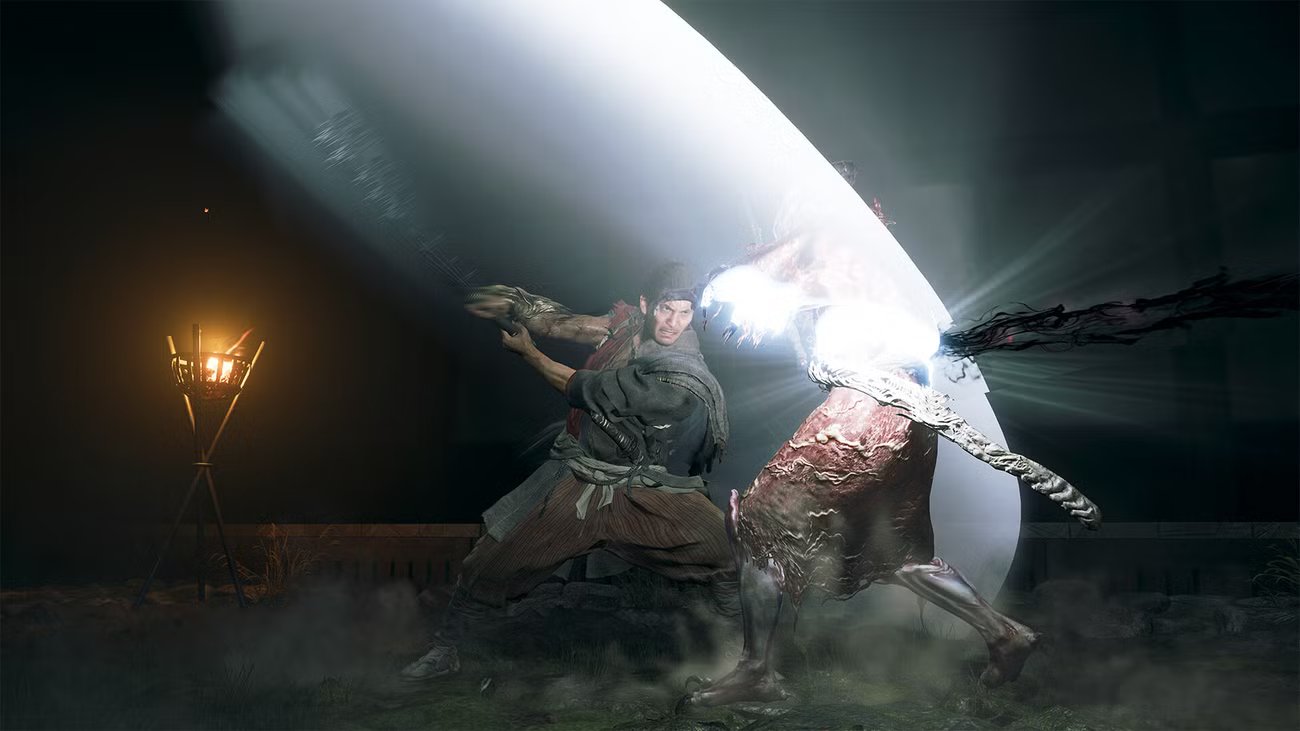
When Onimusha: Way of the Sword launches on Sept. 4, it will bring a lot of history with it. Capcom’s samurai action game is a long-awaited revival of a PlayStation 2 series that, at one time, felt as though it was poised to become a franchise as storied as Resident Evil. Instead, the series quietly faded away after 2006, and an aura of mystique formed in its absence. 20 years later, amid a wave of samurai action games that may never have existed without Onimusha’s influence, Way of the Sword arrives like a rediscovered legend.
It’s fitting, then, that Way of the Sword itself is so indebted to Japanese history. It draws on real people and locations. It plays with myths to craft its demonic enemies. It even pays respects to a long tradition of samurai cinema. In a video interview with Polygon, director Satoru Nihei explained how all of those elements came together to inspire a new vision of Onimusha that exists as part of a broader cultural heritage, rather than in its own digital world.
At a glance, Way of the Sword sure doesn’t look all too grounded. The action game sees you slaying invented monsters in downright surreal places. A recent demo I played ahead of my conversation with Nihei had me hopping through a nightmarish nether realm full of floating debris. That was a deceptively alien slice of the game; so many design decisions in Way of the Sword are very much based in reality. For Capcom, the trick was drawing on real-world mythology and using it to guide the design process.
“When we were looking at the setting of Kyoto, which has a lot of these dark mysteries, a lot of them are attributed to yōkai and traditional Japanese myths. We were thinking about how we could connect that to the Genma.” Nihei told Polygon, referring to the series’ grotesque in-universe monsters. “Maybe they’re connected to all these real world myths from Kyoto… A lot of these [myths] are very unbelievable, but if we did have these elements, like having these Genma be involved, it starts to give these creepy stories a sense of believability and reality to it.”
I could see that on display in a segment that dropped me into a village overrun by monsters. It was surreal and creepy, but the location underneath the corruption still felt authentic. The philosophy goes well beyond capturing the look of Edo-era Kyoto, though. As Nihei explained, even the made-up monsters come from a place of history. For instance, I fought an otherworldly creature named Rasho-gan during my demo. He’s a ghostly freak that tricks villagers into giving up their body parts. Even though Rasho-gan is an original creation, he was inspired by real-world mythology.
“He’s associated with the shrine that you fight him in,” Nihei said. “That shrine is very famous for granting people wishes. If there’s something unfavorable that they want to be separated from, they go there and can get a wish to be severed from that fate. Looking at those elements of bonding and severing, we came up with this motif of scissors to cut threads of fate. That factored into his weapon design… People are going to the shrine to get wishes, and he’s tricking them into giving up body parts. Even within his design, he’s got multiple eyes, hands, arms. That all ties into this identity that’s tied to this location.”
[Musashi] was this character who wasn’t afraid to fight dirty and use whatever means necessary to claim victory.
If you don’t pick up on those subtle connections when playing Way of the Sword, you’ll still feel a more direct link to history through its main character. The game parts ways with past protagonists to instead put you in the shoes of Miyamoto Musashi, a legendary swordsman who was famous for his dueling prowess. Musashi’s fighting style had a direct influence on the feel of Way of the Sword’s action, which is much different from previous Onimusha games.
“We wanted a samurai to be the lead role, and when we were thinking about who could fill that role, the first name that popped up was Miyamoto Musashi,” Nihei said. “Looking at his character, and the legends surrounding him, he was this character who wasn’t afraid to fight dirty and use whatever means necessary to claim victory. That was something that we thought could really factor into the gameplay we wanted to aim for. But he also has this sense of humanity. He has this coarse, rough edge to him, which we thought would make him an interesting character to incorporate in Onimusha.”

Naturally, Way of the Sword isn’t based on any real Musashi story. (He never slayed any demons that we know of.) For Capcom, the trick was finding a way to meld his personality with the rules of the Onimusha universe. The solution to that balancing act? Saddling the poor guy with a talking glove that’s seriously cramping his style.
“One of the core differences with Musashi is that he’s very much a person with core principles, where he wants to get where he wants to go on his own strength alone,” Nihei said. “So, he’s paired with this gauntlet which has granted him great power, but for him, it’s something he doesn’t want. It almost feels like an athlete doping. So we have this tension where he wants to get rid of this gauntlet as quickly as possible, but he doesn’t have the means to do it.”
Even within the real-world Musashi, there’s a second layer of Japanese history. The character features the likeness of the late Toshiro Mifune, an iconic actor who often played a samurai on-screen. Mifune even portrayed Musashi in Hiroshi Inagaki’s Samurai Trilogy. While the casting decision was met with ethical questions when it was first revealed, the team stands by the creative choice (one made with the input of Mifune’s estate) as it’s another way that the game connects to history.
“There were two core reasons for picking Mifune,” Nihei said. “One was that he’s a world-famous samurai icon, and we couldn’t think of anyone to play the role of Musashi in terms of appearance. But we also picked Musashi as the main character early on, but we wanted to show a wild and rough side of him. So, looking for inspiration, Mifune was a very good match, just looking at his movies. We did reference a lot of those Samurai period dramas.”

Nihei said that the team didn’t draw from any movie in particular; rather, they broadly looked at Mifune’s attitude in his performances. But in case you’re curious, Nihei told me that his favorite Mifune film is Sanjuro, the sequel to Akira Kurosawa’s Yojimbo. (An excellent choice.)
As we discussed film history, I noted that gaming itself has built its own parallel tradition at this stage. Games like Sekiro: Shadows Die Twice and Ghost of Tsushima have solidified the samurai epic as a go-to video game genre. Way of the Sword will land smack-dab in the middle of that renaissance, reminding today’s players that Onimusha was once a pioneer. Nihei is modest about how Way of the Sword will fit in with the emerging tradition; he’s just thankful for the timing.
“When we started working on the game in 2020, there wasn’t quite this samurai wave at the time,” Nihei said. “As we started working on it, and seeing games like Ghost of Tsushima come out, in our case, it’s kind of been good timing that we’re in this wave!”
Even if it’s a happy accident, Way of the Sword will make its mark on history come September. It will revive Onimusha at just the right moment, reminding us that even a dormant video game franchise exists as part of an enduring cultural dialog. Players will keep passing down Onimusha the way cinephiles pass down Seven Samurai, historians pass down stories of Miyamoto Musashi’s legendary duels, or parents pass down tall tales of mischievous yōkai to their children. Way of the Sword is putting all of those in conversation with one another.