


Lauren spends most of her time dead in League of Legends, or equally as dead in Valorant. Don’t ask her about Vampire: The Masquerade.
Published:
It’s not every day that Paradox announces a brand new grand strategy IP. As longtime pioneers of the genre, the studio is home to everything from Europa Universalis to Hearts of Iron; from Stellaris to Crusader Kings. Its games span almost the entirety of history, as well as the vast expanse of the universe as we know it. Afterworld, then, just makes sense. It takes a tried and tested formula and asks: ‘what if we Armageddon-ified it?’
You’d be forgiven for believing that Afterworld is Paradox’s answer to Fallout. It has the same neo-dystopian themes, and it’s set in the ruins of a once-proud United States. You’ll spend your time wandering the wastelands, befriending new factions, and clashing with others. The Armageddon trope isn’t unique to Fallout, of course, and there are lashings of Mad Max in Afterworld’s dune buggies and its heavy, industrialized feel. But, for the first time in years, it feels like we do have something that could topple Bethesda’s wasteland dominance – especially with Fallout 5 seemingly being miles away.
Afterworld begins by asking me about my backstory. Who am I, and what are my ambitions? This determines what items my society-to-be has at the beginning of the game, and immediately sets out a narrative arc for me to follow. Where it often feels like you’re an omnipresent God that dictates actions from above, this immediately made Afterworld feel more like a narrative experience – something that I immediately warmed to, as someone who loves story-heavy games.

I’m then plopped unceremoniously into the wasteland. In this demo, I’m cast as one of the Shelterfolk: those who managed to survive the nuclear apocalypse by hiding in bunkers deep under the ground. You can start your Afterworld journey in a variety of different ways, with every Origin having its own unique tech trees and quirks, but the Shelterfolk perhaps feel like they’re the most beginner-friendly.
They do, however, have next to no resources. That’s where scouting comes in. You can send your rangers out to various, procedurally generated areas that are obscured by ‘fog of war’ until they’re fully explored. These different biomes offer a variety of resources and challenges, meaning that no two are the same. On my first scouting mission, I get lucky: I find an area with water, forests, and an abandoned factory which I can raid for scraps. As my rangers continue to explore, it becomes apparent that fate has been on my side: the other areas around me all have clear drawbacks, while my first haven was perfect. There’s some poetry there, I feel.

It’s a no-brainer, then. I choose to settle in the grassy area, and begin allocating work to my fellow tribe members. The UI immediately feels approachable, even to someone who doesn’t have any real expertise in grand strategy games, and as a result I never really felt particularly overwhelmed. A core part of titles like Afterworld is flicking through menus and managing resources, but while I’ll happily admit that playing Europa Universalis 5 last year was absolutely terrifying, Afterworld feels less menu simulator and more actual videogame.
Speaking to me at Gamescom, Game Director Dan Lind was quick to highlight that, with Afterworld, Paradox has actively tried to create a game that’s approachable. Lind – who’s previously worked on Hearts of Iron, Victoria, Crusader Kings, and Stellaris – acknowledges that players no longer have time to be spending hours and hours watching their machinations play out. To that end, while Afterworld is still grand strategy at its core, the action feels a little more fast-paced and approachable – something that, after 30 minutes with the game, I fully agree with.
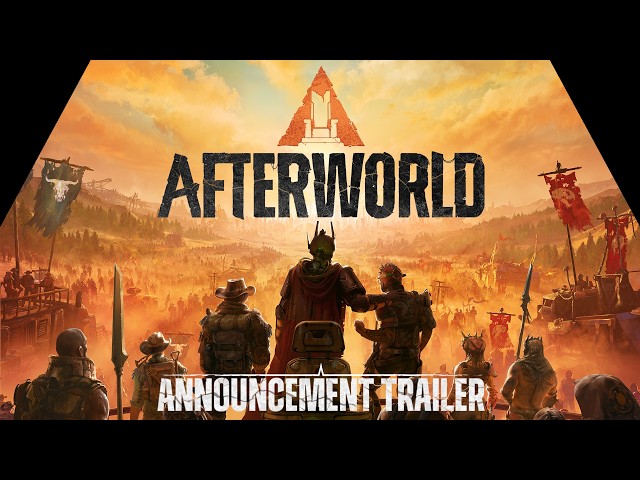
My time with Afterworld was relatively short, and as a result I didn’t get to see how my immediate decisions impacted my tribe’s growth. I did, however, walk away intrigued by what Paradox has built here – perhaps more intrigued than I was by the likes of Europa Universalis.
Despite having degrees in history and war studies (I had a great childhood, trust me), I’ve always found Paradox’s temporal focus to be a little off-putting – for whatever reason, it just isn’t for me. In that regard, Afterworld feels like a brave new look: it’s fully fictional but, unlike Stellaris, feels rooted in humanity and its struggles. The team has done a great job of straddling the line between fantasy and reality, much the same way that Bethesda did with Fallout before it.
As someone who doesn’t naturally gravitate to strategy games, I’m actively excited about Afterworld. The blend of narrative, allohistorical themes, and approachable yet hard-to-master gameplay intrigues me, and it feels like the first Paradox GSG that I’ll really be able to sink my teeth into. The wilderness beckons, and I can’t help but want to answer its call.
Keep scrolling for next article