
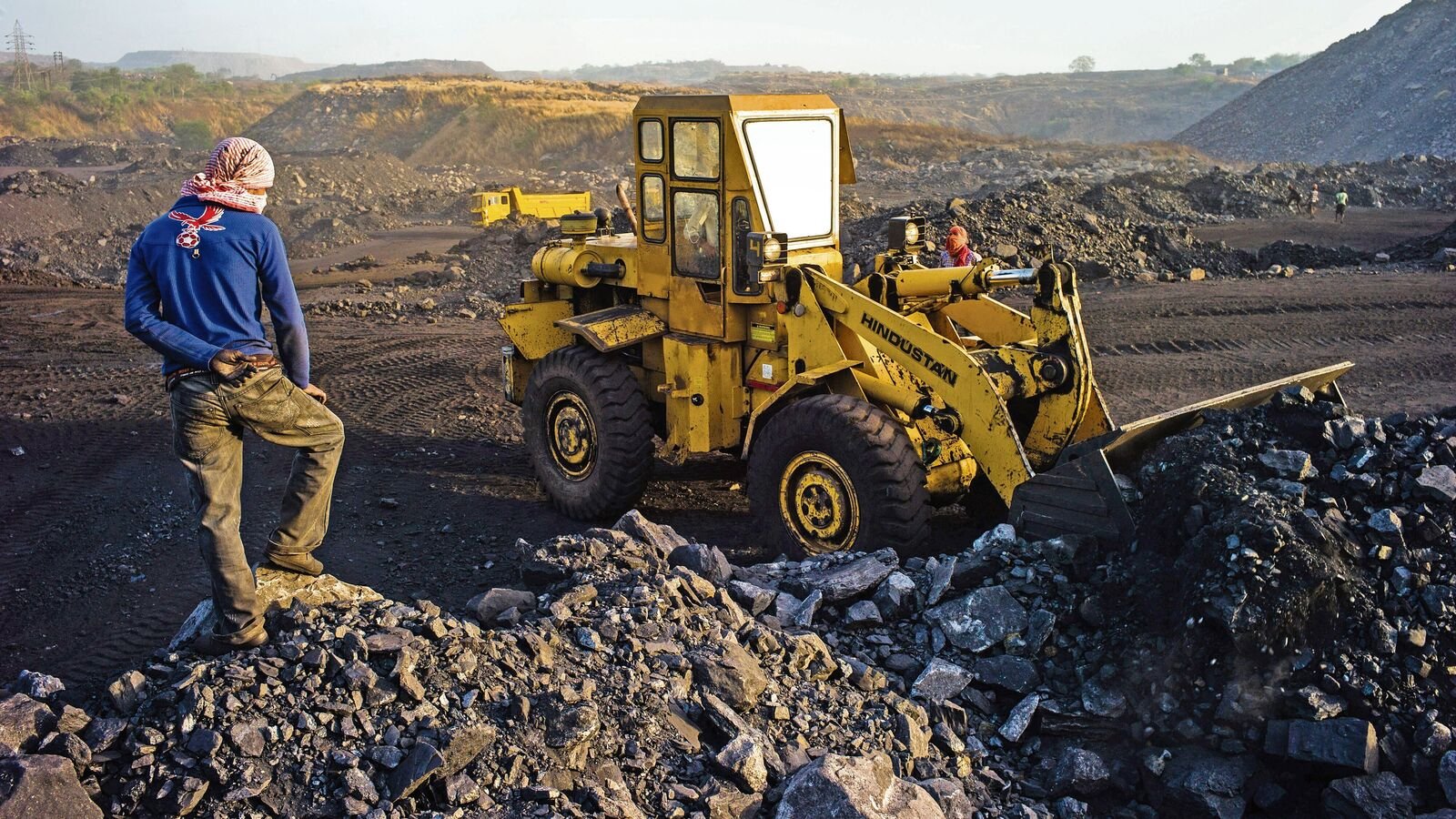
Coal India Ltd’s second-quarter results didn’t bring any fireworks. The miner’s consolidated revenue slipped 3% year-on-year to ₹30,190 crore, hurt by softer realizations and weak production and sales volumes. Production fell 4% year-on-year to 145.8 million tonnes (mt) and sales dropped 1% to 166 mt as a prolonged monsoon played spoilsport.
Beyond seasonality, the bigger challenge was the muted power demand in the first half of FY26 that weighed on volumes. Sales traction in both fuel supply agreements (FSA) and e-auctions was subdued in Q2. FSA volumes fell 0.5% and contributed 88.8% of total volumes. E-auction volumes rose only 1%, contributing 9.2% of total volumes.
After the Q2 results, analysts slashed their earnings estimates. To factor in lower volumes and prices, Nuvama Research trimmed its FY26 and FY27 Ebitda estimates by 3% and 2%, respectively.
Amid weak demand, e-auction realizations fell 7% year-on-year to ₹2,292 per tonne, which were about 55% higher than FSA prices. The premium was 69% a year ago. This hurt Q2 profitability. Blended coal realizations dropped 0.3% to ₹1,621 per tonne.
“E-auction prices remain tepid. Hike in FSA price, if it comes, will be only in FY27E when Coal India implements wage hikes for non-executives,” said Nuvama, adding that the only silver lining was a high dividend yield of 6-7% ( ₹25 per share).
Ebitda decline
That means realizations may stay under pressure through FY26, even if volumes recover modestly. Costs per tonne rose by ₹64 year-on-year on higher other expenses and lower stripping activity adjustments, even as employee costs eased slightly. Thus, Ebitda fell 23% to ₹5,850 crore, translating into ₹352 per tonne, down from ₹452 last year.
At about ₹386, the stock trades at 4.4x FY27 EV/Ebitda, as per Bloomberg. Weak earnings visibility remains a worry. Motilal Oswal Financial Services expects Coal India to clock a 3% volume CAGR over FY25-28, which would translate into 5% revenue and 7% Ebitda CAGR.
Coal India’s plans to expand coal-washer capacity and invest in renewables may aid diversification, but they won’t offset the current volume weakness. Despite a near debt-free balance sheet, unless volume growth is ignited, Coal India’s investors may have to settle for dividend comfort while waiting for the next spark that could be a trigger for the stock.