
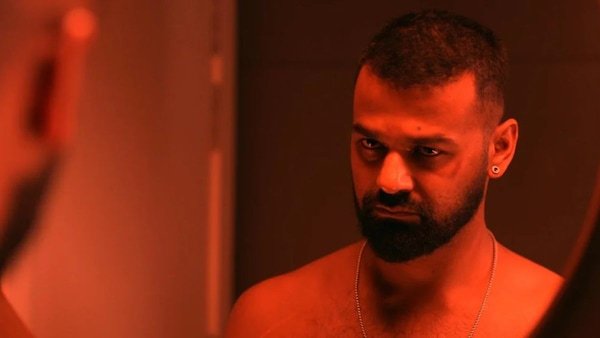
RAHUL SADASIVAN has a thing for singular settings. His genre can often be defined as chamber horror. In Bhoothakaalam, the film that announced him, it is the dysfunctional domestic abode that is both the place and the protagonist. In Bramayugam, a 17th-century mana belonging to a Namboothiri, shot in glorious monochrome, makes us wonder if it is haunted or is the object that haunts.
Sadasivan’s horror impulses are always churning, and now in this generational run, his latest film Diés Iraé begins from inside a cement churner as we gradually pan out to another conspicuous space, the desolate site under construction with unpainted walls, windowless free falls and an assorted collection of safety hazards. A tea glass breaks, and the contractor, Madhu (Gibin Gopinath), offers an ominous look before receiving a phone call that announces a death by suicide. We move away, still searching for this film’s setting.
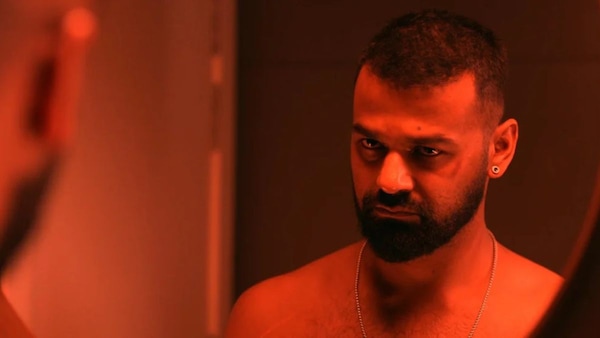
Still from Diés Iraé.
The body fished out of the well in the courtyard of a home is that of a young woman, a dancer named Kani (Sushmitha Bhat). She didn’t leave a note, but Madhu remains disturbed. Her younger brother Kiran (Arun Ajikumar) exudes nervous energy about him, and he notices that her hand refuses to rest. The hand springs right back up with the fingers shaped into a claw. A quick cut takes us from shocked mourning to intense persuasion.
Rohan (Pranav Mohanlal) is making out with a friend who doesn’t let a phone call from her lover interrupt their revelry. As Rohan walks out, he also gives us a tour of this sprawling ultramodern manor, one that he seems to have thrown open for a party tonight. From a friend, he learns that their schoolmate Kani has died by suicide. His reaction could be termed as nonchalant concern. He expresses shock — anything less, and he could have been termed a psychopath, but the news doesn’t seem to affect him. He is a yuppie rich kid manning a state-of-the-art palace all alone with his parents on the other side of the world. His life is football with friends, parties and the occasional woman who leaves in the morning. But then we see him check his messages—a lot of messages, voice notes and photographs with Kani. Sadasivan paints a picture. Or wants us to paint it for him.
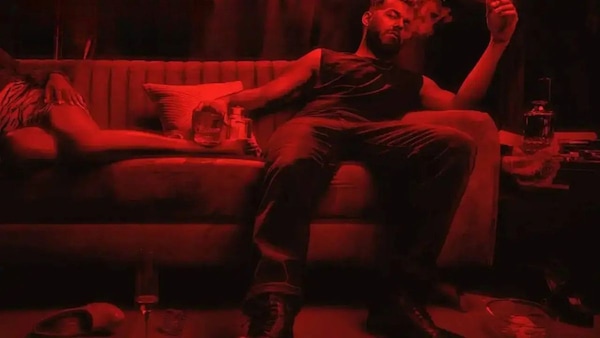
Promo poster for Diés Iraé.
As mysterious sounds (anklets! Is another dancer set to haunt Malayalam cinema over thirty years after the original?) and shadows accost Rohan at night, we harbour suspicions about his involvement in Kani’s death. The Sadasivan-prized setting doesn’t arrive here, and the action keeps shifting — from Rohan’s bungalow to Madhu’s modest old school home and finally to a most unexpected location.
Unlike in Bhoothakaalam and Bramayugam, Sadasivan stacks Diés Iraé with pulpy twists of Jenga blocks, where each reveal shakes up the larger plot. The film’s whole deal is to make us trust our assumptions and then pull the rug away from us. In any other film, this would be more of the same, but Sadasivan’s filmmaking technique is sharper than most. His horror set pieces are games of props and lights, sounds and shadows. Look at what he accomplishes with a hair clip or an ice cream tub. Or how he applies Christo Xavier’s waltzy score to some scenes and defers to silence in others. The joy is less in the plot and more in the atmosphere with this filmmaker. An early scene has Rohan tense and panting at the invisible force in his bedroom, but trust Sadasivan to have a silhouette with a faint head sitting out of focus deep into the frame. It is the kind of thing that plays with your mind. Was it really a head or is that just in our head? Are we all Rohan now? The figure doesn’t affect the scene, but it informs what comes after. A lot of Diés Iraé is about premonition and the unnerving dread that lurks underneath.
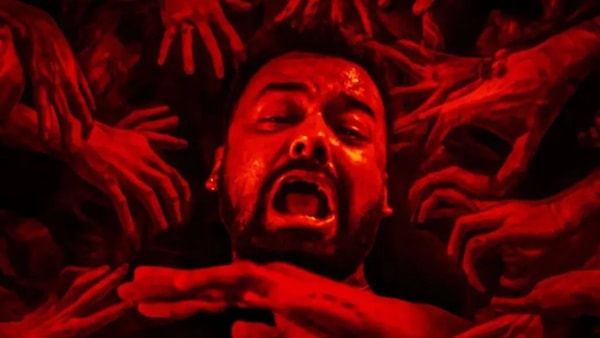
Promo poster for Diés Iraé.
The latter half of Diés Iraé shifts tone and genre. While the film remains interesting, it does affect the larger tapestry of the story. From bleak horror, it becomes a horror procedural; the solitary Rohan now has a friend. Madhu and Rohan get together to be the buddy cop set out to investigate everything mysterious about Kani’s death. It is disappointing how Diés Iraé’s intensity tapers towards the end, its innovative use of lighting and sound gives way to more generic action, coupled with the traditional creepy. The film never gets around to justifying its title; the religious connotations are more window dressing. Yet, Diés Iraé is an admirable entry in Indian horror, a win more for form than plot. Rahul Sadasivan proves that he can be minimalist and still conjure fear.