
Silent Hill: Townfall is Konami’s latest experiment in branching the horror game series out to new locations. After Silent Hill f took us to ’60s rural Japan, Townfall zips across the globe to its more modern 1996 setting: the Scottish village of St. Amelia. This time, it’s the Glasgow-based Screen Burn who are taking charge, and that means finding themes that evoke ‘Silent Hill,’ despite the move away from its home territory. At Gamescom, we asked Writer and Creative Director Jon McKellan of Screen Burn and Konami Producer Motoi Okamoto about Townfall’s use of analog horror, and where its journey will lead.
Okamoto reveals (via translator) that the partnership with Screen Burn came as the result of conversations between himself, Konami US, and publisher Annapurna Interactive. “After we were introduced to their name, we of course made sure to play their previous games, Stories Untold and Observation, and that really clicked with us. We were really impressed with those games, so we decided to follow through.”
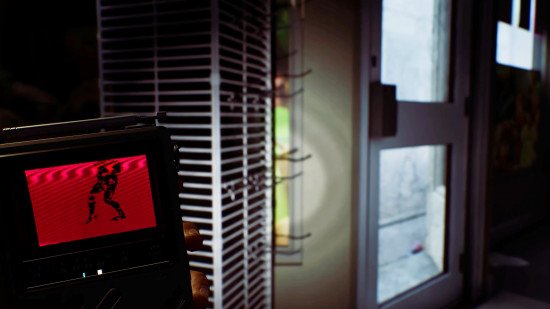
Screen Burn’s history with narrative-driven thrillers runs all the way through Silent Hill: Townfall, which adopts a first-person perspective to put you right in the thick of what protagonist Simon Ordell sees and hears. It’s a new format for Silent Hill, and McKellan says this was the pitch right from the start: “We felt that was going to be the best fit for a game where you want the player to really connect to the environment around you.” The first-person view is also the ideal way to integrate Townfall’s most prominent tool, a pocket television called the CRTV that can tune into signals as you explore.

The CRTV, to me, is what makes Townfall feel so immediately Silent Hill in nature, even more so than wandering the streets of a foggy, seemingly abandoned town. It evokes that terrifying radio static, the sense of threat, and of a reliance on unstable, basic technology. “It gives you this sense that it’s a bit real, or a bit fragile, or it might switch off at any minute,” McKellan remarks. Using the CRTV also provides a “natural texture, a tactile feel” that helps to sell the immersion of being in the world, he explains.
The CRTV will let you catch glimpses of the past, acting as a storytelling device, a threat indicator, and a way to help solve puzzles. That means balancing “the right amount of information” it provides to the player, McKellan notes. He says that at one point during development, “all the enemies were on the same channel,” but that the team continued to experiment with how much you could access at once. “The one thing we made sure of is that the CRTV is never going to lie to you. It’s one of your only things you can really trust.”
Townfall’s story is also “completely ours,” McKellan confirms. He says Konami was “understanding with what we wanted to do” and how it could connect to the wider series. “One of the incredible things about Silent Hill is that it is experimental to some extent, and it’s happy to change things up from one game to the next, to try new things.” Screen Burn was given the freedom to lead the project, with Konami on hand to “help steer anything that’s not quite right, or too similar to another game or something.”
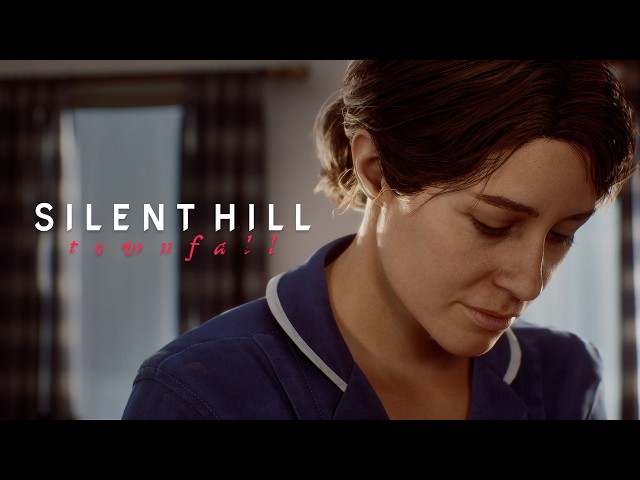
With Screen Burn’s deep roots in Scotland, McKellan says the quiet streets of St Amelia play off touchstones from the team’s youth, though he admits the result can be more unsettling to others. “If it feels nostalgic and familiar to us, it’s really weird for all the players.” He thinks the team feels “a different sense of order from what other people feel” as they explore.
Simon’s story has five possible outcomes in total, although there are just three main endings to encounter on your first playthrough of Silent Hill Townfall, and they’re based on how you play. “You’re never really doing a ‘choose A or B, Google them to get the ending,'” McKellan explains. “If you play aggressively, if you pick up all the objects, if you’re investigating – loads of different play metrics move the needle,” he notes.
Silent Hill: Townfall releases on Thursday September 24, priced at $49.99 / £44.98 on Steam. In closing, Okamoto remarks that “the tone was really a big part of selling what the game would be like for players.” He believes the vibe captured in the trailers is “something we were really keen to preserve, and I think we’ve hit the right tone.”
Additional reporting by Tom Hopkins for PCGamesN at Gamescom.