
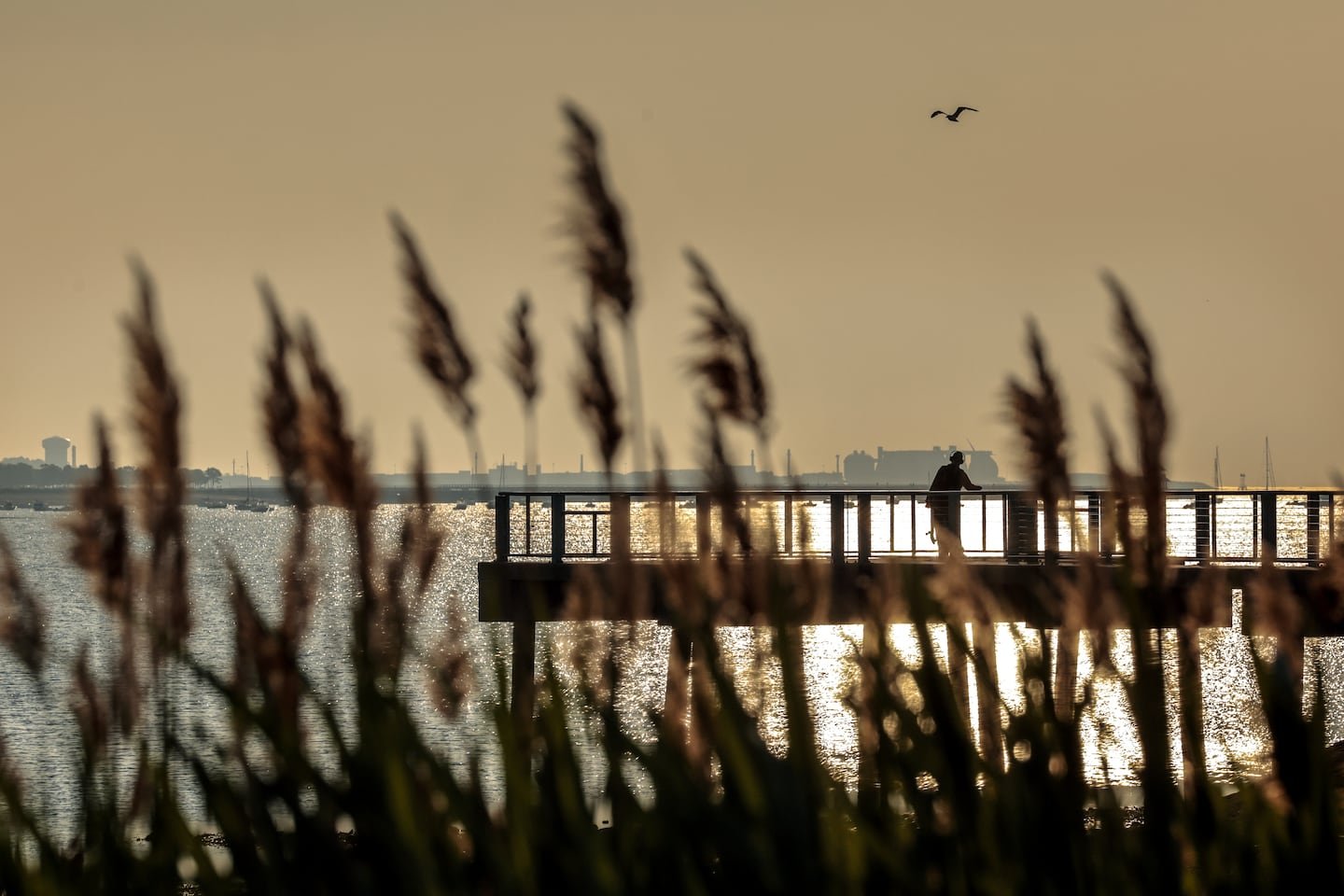
Increasingly, that’s not just a problem for Canada but for New England and other distant locations because toxic smoke from the fires, carrying minuscule particles of pollution, wafts into the atmosphere and is carried across thousands of miles. And with that smoke comes heightened health risks for vulnerable populations, like children, the elderly, and people with existing breathing conditions.
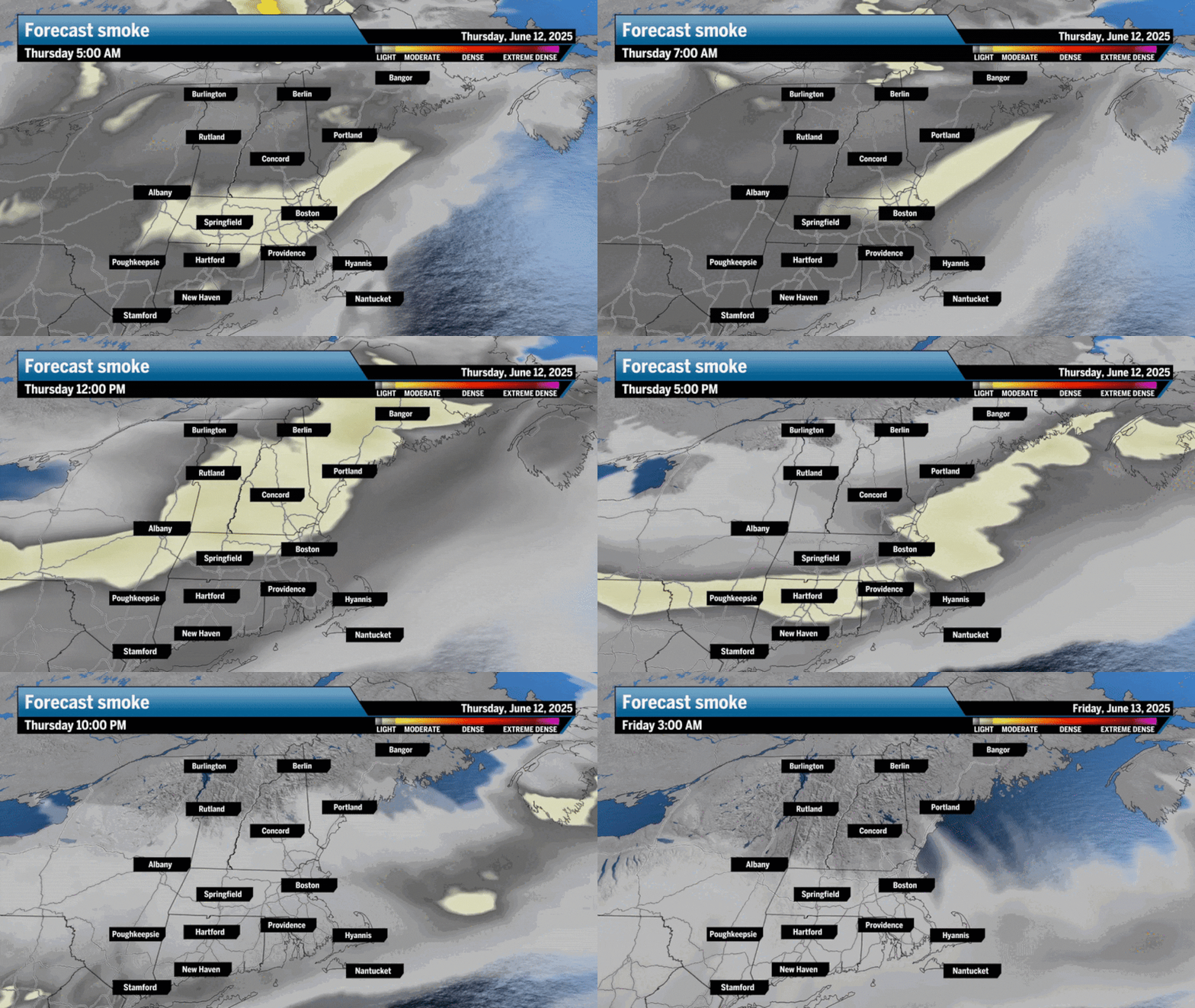
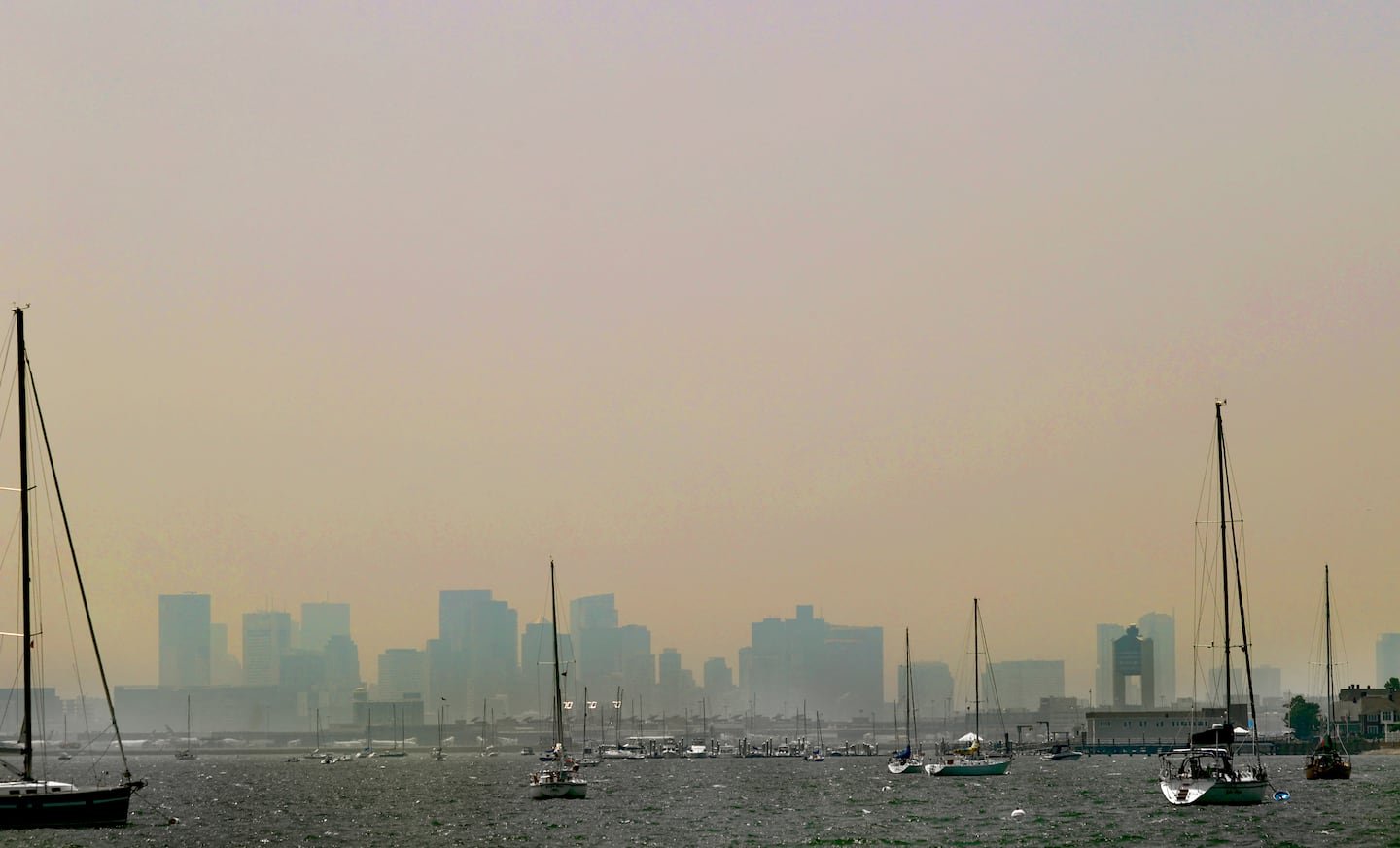
Air quality in Boston was in the “moderate” range for the middle of this week, though it hit “unhealthy” levels in the Boston area Thursday for people at heightened risk. Earlier this month, air quality in the Midwest reached “very unhealthy” levels, and smoke traveled as far as Europe.
Warmer winters, caused by an increase in greenhouse gases in the atmosphere, are turning the boreal forest into a tinderbox, said Ness. Less snow means less moisture on the ground, allowing trees to dry out, and it also leads to pests that can survive year-round and leave dead trees in their wake — the perfect fuel for a fire.
For more than a decade, Canada’s boreal forest has experienced warmer, drier conditions than usual. Add on the warm, dry past winter, followed by a warm, dry spring, and “conditions are primed for bad fires to ignite easily and to spread quickly,” he said.
It’s reminiscent of, thoughnot as bad as, 2023, when wildfires in Canada led to eerily apocalyptic skies on the East Coast. For one day, New York City had the worst air quality in the world.
“Prior to 2023, I think most people thought of wildfires as a West Coast problem,” said Nicholas Nassikas, a pulmonary and critical care doctor at Beth Israel Deaconess Medical Center. “And what we’ve in New England come to realize is that this is not just a West Coast problem.”
When wildfire smoke arrives in New England, Nassikas said, he hears from more patients, many of whom have underlying respiratory conditions, who say they have trouble breathing.
A study he coauthored recently found that between 2006 and 2020, climate change was responsible for 15,000 deaths due to exposure to air pollution from wildfires. Those deaths were concentrated in the West but, he notes, timing is everything.
In the five years since the end of the study period, smoke has arrived more often in heavily populated East Coast cities such as Boston and New York City. “I’d have to imagine that the effects would be more widespread than just West Coast,” he said.
Here in New England, where historically cooler summers mean many homes don’t have air conditioning, smoke can be especially dangerous, said Jennifer Stowell, a research scientist at Boston University’s Center for Climate and Health. Smoky air often coincides with hot weather, so guidance to stay inside can lead to tough choices for vulnerable people without air conditioning.
“You’re choosing whether you suffer from heat or from the smoke,” she said.
And while “moderate” air quality levels won’t be a problem for many people, they are for those at higher risk,, she said — especially when wildfire smoke drives the spike in air quality.
“On a normal day when it’s in the yellow, it’s probably not something to be super concerned about; maybe you make sure that if your kids have asthma, they have their medication on hand,” Stowell said. “But wildfire smoke has been shown to be more toxic than ambient air.” One 2021 study found wildfire smoke is roughly 10 times more harmful than ambient air pollution. So more precautions may be warranted, Stowell said.
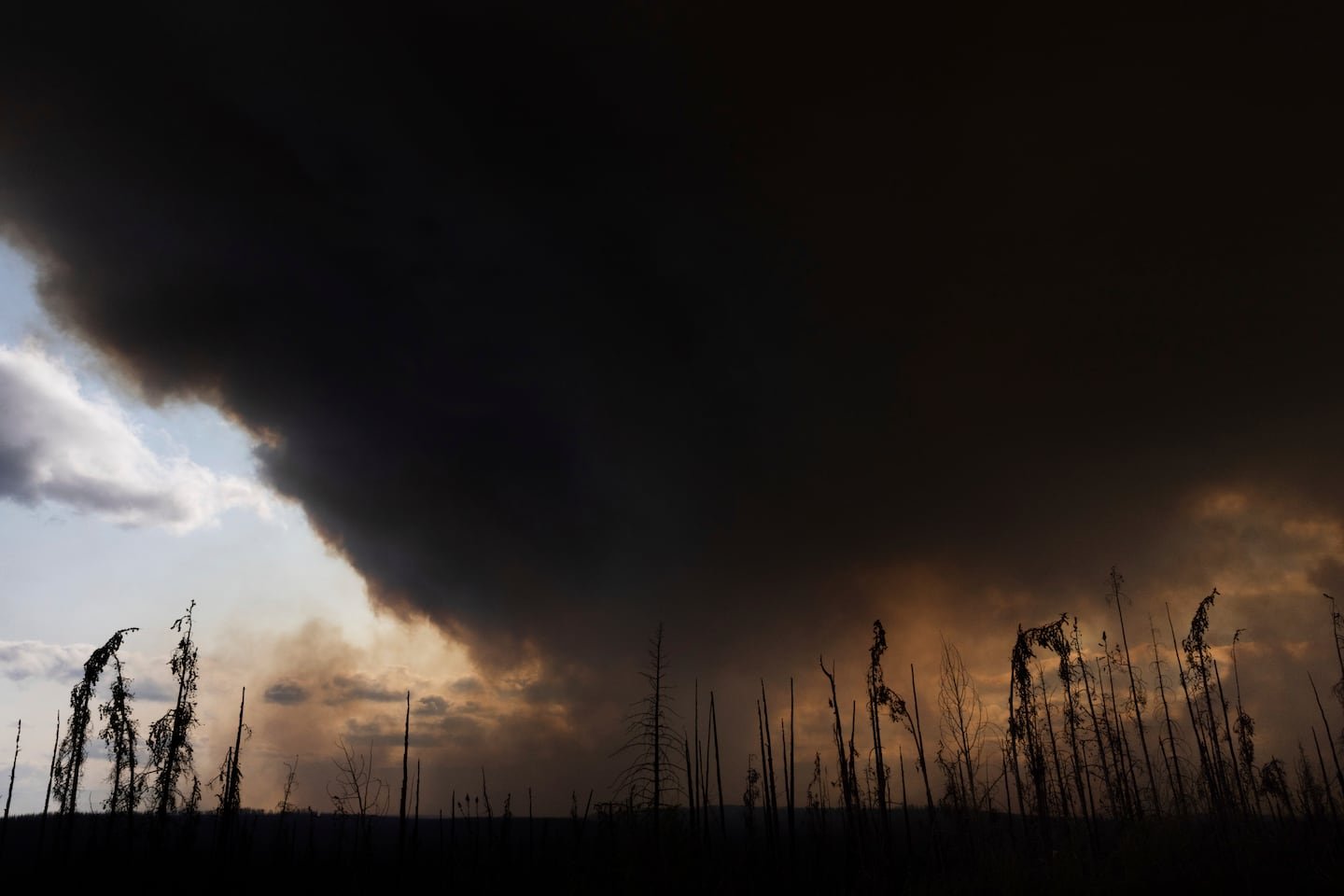
This year has been the second-worst start to the Canadian wildfire season since 2000, said James MacCarthy, a research associate with Global Forest Watch, a wildfire-monitoring project of the World Resources Institute. The worst was 2023, when Canadian wildfires released approximately 3 billion tons of carbon dioxide — roughly equivalent to the annual carbon emissions from the use of fossil fuel in India, the third-largest producer of greenhouse gases globally, MacCarthy said.
And that’s the trouble with wildfires. They are among the most recognizable symptoms of a warming climate, and also a perpetrator of continued climate change, due to the greenhouse gases that are released.
Canada, with its vast tree cover, is warming twice as fast as the global average, according to a Canadian government analysis. As that happens, it’s “expanding the area that can be burned, and it’s also extending the length of fire seasons, so making it more likely that we’ll have these large fires,” MacCarthy said.
Here in Massachusetts, flash droughts have become more common, said Dave Celino, chief fire warden for the state Department of Conservation and Recreation. And when drought comes on quickly and lasts, fires happen more frequently.
That was the story this year, until a recent rainy stretch ended the drought in most of the state. But in January, which had an average of seven fires in the last seven years, there were 25, Celino said, mostly because of a lack of snow. The seven-year average for March in Massachusetts is 164 fires; there were 380 this year.
“As fire managers, we’re not climatologists,” Celino said. “However, we can tell you that from our experience on the ground, there is definitely this higher frequency of changes.”
Here, as in Canada, when you layer a warm, dry period over an extended trend of higher temperatures — taking into account all that entails, with increased pests and dried-out trees — the risk adds up. “It really is an unfortunate chain of events that, you know, they’re all related,” he said.
Sabrina Shankman can be reached at sabrina.shankman@globe.com.