
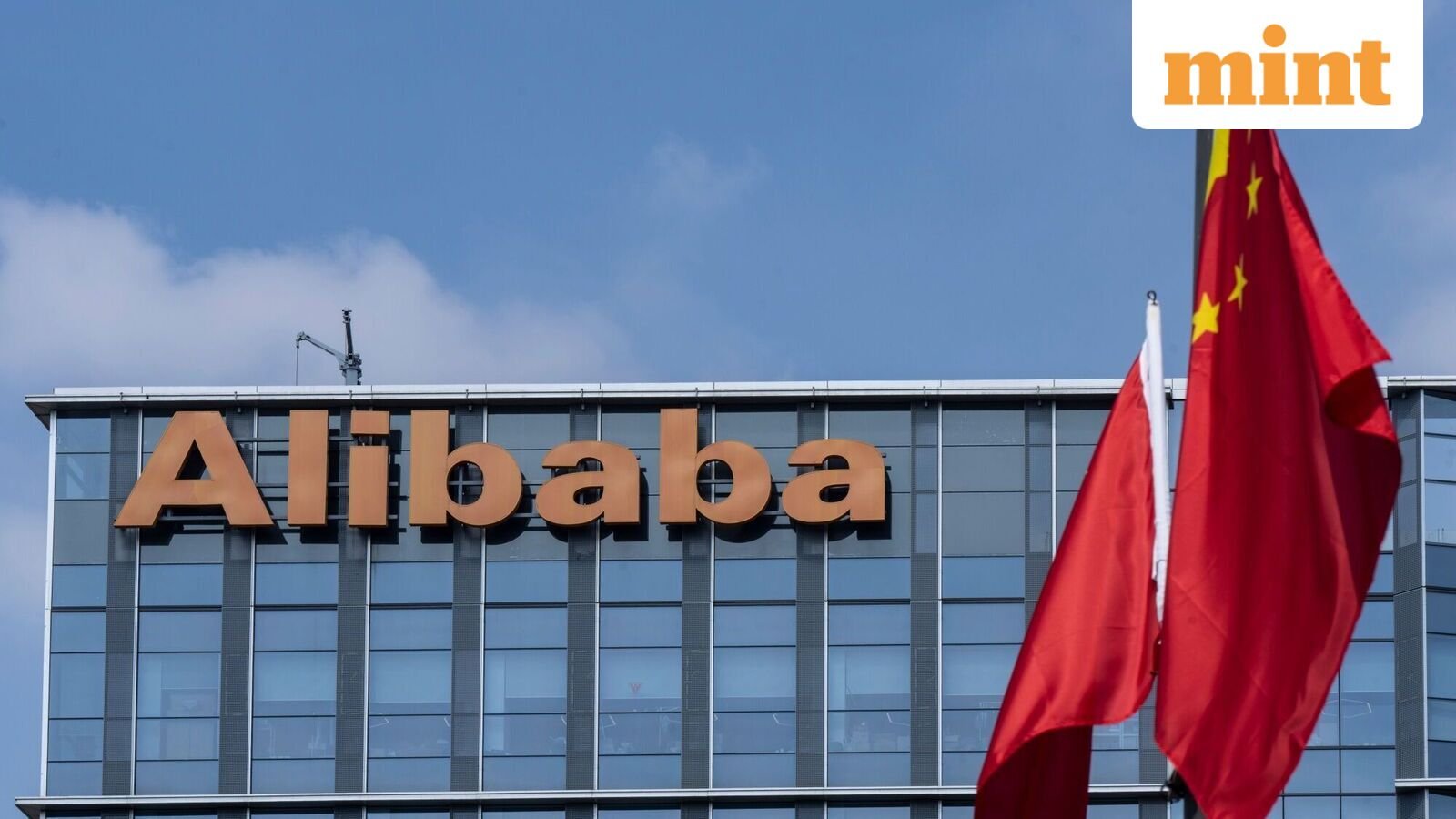
Chinese e-commerce giant Alibaba Group Holding Ltd’s US-listed shares jumped over 4% on Tuesday as the company reported better than expected results in the second quarter of the ongoing fiscal due to a bumper growth in the sales of its key AI division.
During pre-market trading, Alibaba stock price jumped nearly 4.3% as investors did not seem to bother about a plunge in profitability.
Alibaba has posted better-than-projected 34% growth in its pivotal cloud business, highlighting the enormous demand for computing during China’s AI boom.
This performance helped propel overall revenue 5% higher to 247.8 billion yuan (£27.5 billion) in the September quarter, just outstripping expectations.
“Robust AI demand further accelerated our Cloud Intelligence Group business, with revenue up 34% and AI-related product revenue achieving triple-digit year-over-year growth for the ninth consecutive quarter,” CEO Eddie Wu said in an earnings statement on Tuesday.
One-Hour Delivery Services
The company posted a 16% rise in Chinese e-commerce revenue for the period, suggesting it was faring well in a three-way battle with JD.com Inc. and Meituan.
Alibaba’s results come against the backdrop of a costly battle in China’s “instant retail” sector — which the company terms “quick commerce” — where major players are pouring billions into one-hour delivery services to capture market share.
At the same time, Alibaba has been investing heavily in artificial intelligence, emerging as one of China’s leaders in the field. The strong results are likely to encourage investors betting on Alibaba as a frontrunner in artificial intelligence development. The company has accelerated the release of AI models, culminating in the relaunch of its flagship Qwen mobile app.
In September, Eddie Wu set out plans to build a “full-stack” suite for AI development, from advanced models to the infrastructure — such as semiconductors — required to build them. The company’s chip unit, T-Head, has gained headway in efforts to compete with Huawei.
Alibaba’s net income fell to 20.99 billion yuan during the period — reflecting not just the discounting but also the mounting costs of AI development. Sales and marketing expenses doubled in the quarter.
During China’s Singles’ Day sales period, Alibaba continued to push overseas expansion. Its Taobao marketplace launched Singles’ Day promotions in more than 20 countries. The company overall saw 9.3% sales growth from the event.
Alibaba joins JD.com and PDD Holdings Inc. in reporting better-than-anticipated results, boosted by Beijing’s stimulus measures and billions of dollars in subsidies as they vie for shoppers and diners.